

Key Features and How to Navigate
PATHOLOGICAL DEMAND AVOIDANCE
Extreme, unreasonable, and beyond normal limits: It can also describe behavior or feelings that are significantly outside the range of what is considered normal or acceptable, often suggesting a mental or emotional disturbance.
An insistent and peremptory request, made as if by right.
The action of keeping away from or not doing something.
🔄 Shifting your mindset to foster empathy and flexibility
🏡 Creating a supportive and low-demand environment
📉 Minimizing the perception of demands to reduce anxiety
🎁 Using rewards, praise, and sanctions with caution and sensitivity
🎧 Addressing sensory needs to promote comfort and regulation
🗣️ Supporting social interaction and communication in accessible ways
❤️ Responding to distressed behavior with compassion and strategic care
WELCOME!
PATHOLOGICAL DEMAND AVOIDANCE
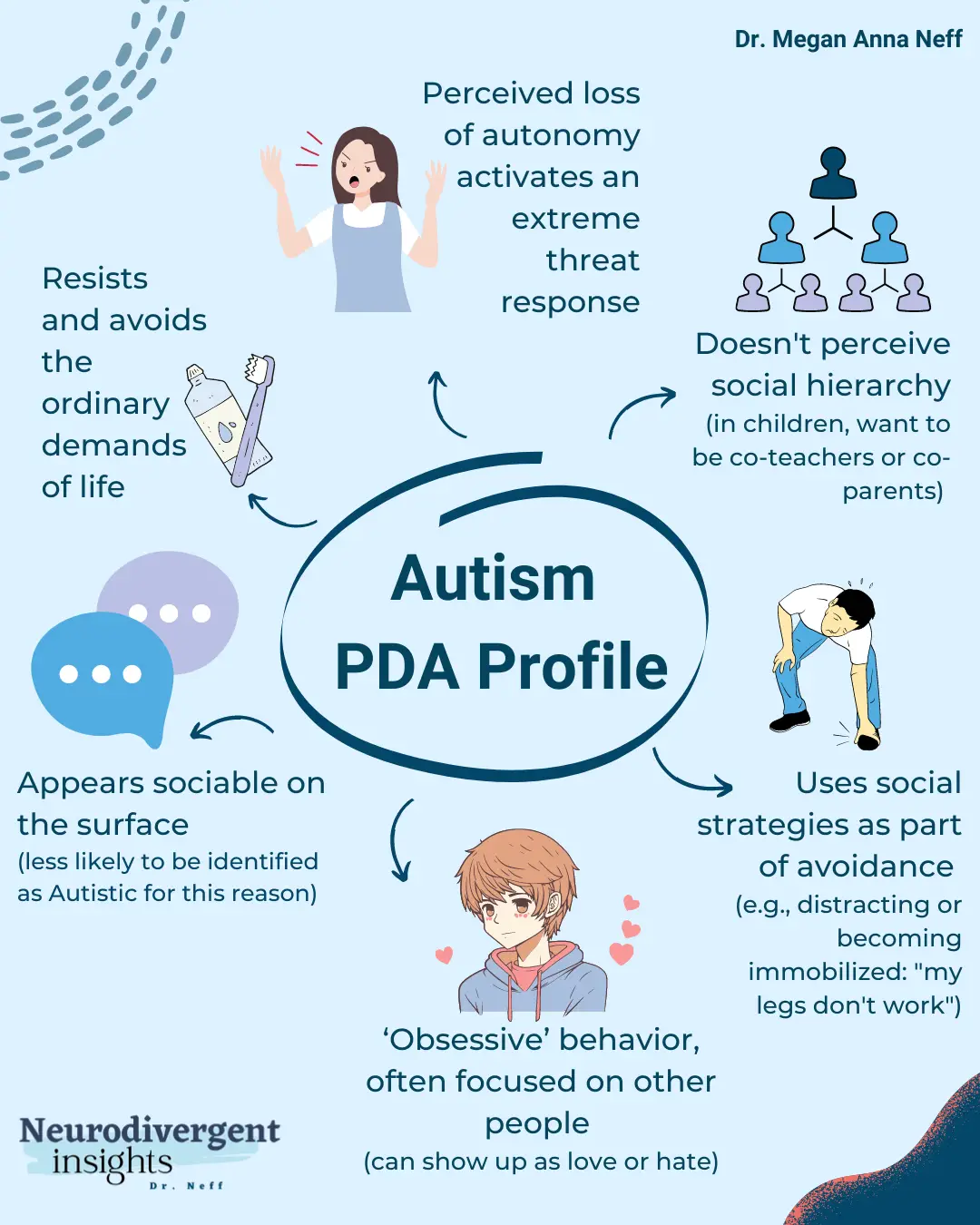
While outward behaviors may sometimes resemble one another, the underlying drivers of demand avoidance can vary significantly depending on the individual and context. Pathological Demand Avoidance (PDA), for example, is a profile often associated with autism and is characterized by an extreme avoidance of everyday demands due to anxiety and a need for control.
In addition to PDA, other forms of demand avoidance include:
- Simple Demand Avoidance (SDA)
- Rational Demand Avoidance (RDA)
- Autistic Demand Avoidance (ADA)
- 🧠 P - Pathological
- 🔄 D - Demand
- 🏡 A - Avoidance
When humans resist anything that feels like a demand.
ABOUT PDA
Pathological Demand Avoidance (PDA) or extreme demand avoidance is a proposed disorder, and proposed sub-type of autism spectrum disorder, defined by characteristics such as a demand avoidance—which is a greater-than-typical refusal to comply with requests or expectations—and extreme efforts to avoid social demands. Wikipedia – PDA
Can’t, not won’t!
A question changed to a declarative structured statement often yields different and more favorable responses.
It’s not a matter of refusal—it’s a matter of inability. What may seem like deliberate defiance at first is often rooted in biological and neurological disruptions. These disturbances affect adrenaline-driven responses such as fight or flight, leading to heightened anxiety and reduced flexibility.
Although Pathological Demand Avoidance (PDA) is not officially recognized as a distinct diagnosis in the United States, this does not negate the underlying biological disruptions—particularly those linked to heightened fight-or-flight adrenaline responses.
ADRENALINE Responses
The F-Adrenaline responses through visualizations

F – ADRENALINE Responses
F – ADRENALINE Responses When the body senses stress or danger, it instinctively and...View More
FIGHT – Defensive Frustration
F – ADRENALINE Responses FIGHT Defensive Frustration The fight response arises when the nervous...View More
FLIGHT – Worried Redirection
F – ADRENALINE Responses FLGHT Worried Redirection The flight response is the body’s instinctive...View More
FREEZE – Overwhelmed Disengagement
F – ADRENALINE Responses Freeze Overwhelmed Disengagement The freeze response is the nervous system’s...View More
FAWN – Performative Engagement
F – ADRENALINE Responses Fawn Performative Engagement The fawn response is a lesser‑known but...View More
FLOP/FAINT- Paralysis, fainting, loss of physical control
F – ADRENALINE Responses Flop/faint Paralysis, fainting, loss of physical control The flop response—sometimes...View More
FUNSTER – Playing the clown and seeking dopamine satisfaction
F – ADRENALINE Responses Funster Playing the clown and seeking dopamine satisfaction The “funster”...View More

FIB – Concealing guilt
F – ADRENALINE Responses FIB Concealing guilt Fibbing is an emergent protective response and...View More

NEUROTYPE MADNESS – Right v Left Brain Chaos
F – ADRENALINE Responses Neurotype madness Right v Left Brain Chaos We are all...View More

PDA Resources
PDA Resources That Have Proved Helpful To Our Family —- PDA —- RELATED PDA...View More
PDA Resources2
PDA Resources Can’t not won’t! Learn more → PDA Resource Links Approximate Views: 0View More

Autonomic Nervous System and Biological Responses
ADRENALINE Responses
When the body senses stress or danger, it instinctively and automatically activates a set of protective reactions often known as the “F” responses—Fight, Flight, Freeze, Fawn, Flop, Funster, and Fib. These instinctive patterns are part of one’s own built‑in survival system, designed to help navigate moments that feel threatening, whether the threat is physical, emotional, or psychological.
Each response serves a purpose. It is the body’s way of trying to keep one safe in situations that feel overwhelming or uncertain. Yet these same reactions can also be triggered by everyday stressors that are not truly life‑threatening, simply because one’s own nervous system interprets them as danger.
Recognizing these patterns can be a meaningful step toward greater self‑awareness, emotional regulation, and healing. When one understands how these responses show up, it becomes easier to move from automatic survival mode into more intentional, grounded choices.
Each response serves a survival purpose, helping us navigate overwhelming or challenging situations. Though biologically rooted and designed to keep us safe, these reactions can also be triggered by everyday stressors that aren’t inherently life-threatening. Recognizing and understanding these patterns can be a meaningful step toward greater self-awareness, emotional regulation, and healing.


WHY I CREATED THIS PAGE
In the UK and Australia, Pathological Demand Avoidance (PDA) is described as a behavioral profile often associated with autism. It is characterized by an intense resistance to everyday demands and a reliance on social strategies to avoid them. While these behaviors are commonly understood to stem from high anxiety and a strong need for control, an emerging body of work suggests that PDA may also reflect underlying neurological disruptions, not just social or behavioral patterns. This perspective shifts the focus from “challenging behavior” to the possibility of differences in stress‑response systems, executive functioning, sensory processing, and threat perception—areas where the nervous system may be operating in a heightened or dysregulated state.
In the United States, PDA is not formally recognized as a standalone diagnosis. Within the DSM‑5 framework, it is generally viewed as an emergent comorbid profile, most often discussed in relation to autism. PDA remains less widely acknowledged in the U.S. due to limited awareness, ongoing debate over its definition, and concerns related to diagnostic liability, service eligibility, and support structures. It also sits uneasily within certain dominant cultural frameworks—such as faith‑based, productivity‑driven, or economically oriented systems—that tend to favor compliance, self‑regulation, and linear developmental expectations. These broader social norms can make it harder for PDA to be understood, validated, or integrated into mainstream clinical practice.
Emerging research is beginning to highlight post‑traumatic stress responses and other forms of nervous‑system dysregulation as potentially significant contributors to PDA‑like presentations. Rather than viewing PDA solely through a behavioral or social lens, this evolving perspective considers how chronic stress, trauma, sensory overload, and disrupted neurobiological pathways may shape a child’s capacity to tolerate demands. This area of study is still developing, and our understanding will continue to shift as new evidence, data, and clinical insights become available.
As a caregiver and parent of four neurodivergent children—two of whom have PDA profiles—I am frequently asked, “What exactly is Pathological Demand Avoidance?” These questions often arise in moments when others are offering critical, sometimes unsolicited, feedback about my parenting choices or the strategies I use to support my children and the other children I interact with. From the outside, my approach can appear “permissive” or overly flexible. In reality, it is grounded in connection, emotional literacy, and age‑based capability modeling.
My goal is not to remove accountability but to teach it in a way my children’s nervous systems can actually process. For PDA‑profiled kids, traditional top‑down discipline often triggers panic, shutdown, or escalation. What looks like “avoiding consequences” is usually a nervous system overwhelmed by the demand itself. By meeting them where they are developmentally—and by building trust, co‑regulation, and emotional vocabulary—I’m helping them gradually learn to take ownership of their choices and the responsibilities that come with them. It’s a slower, more relational path, but it’s the one that actually works for my kids.
It is my growing observation that many caregivers—especially mothers— are just overwhelmed, asking, “What am I doing wrong?” They’re exhausted, confused, and often carrying the emotional labor alone. And when their partner dismisses PDA or says they “don’t have time” to learn about it, that burden becomes even heavier.
But the truth is this: you’re not doing anything wrong. What you’re seeing are not signs of bad parenting or a misbehaving child. They are signs of a nervous system under strain.
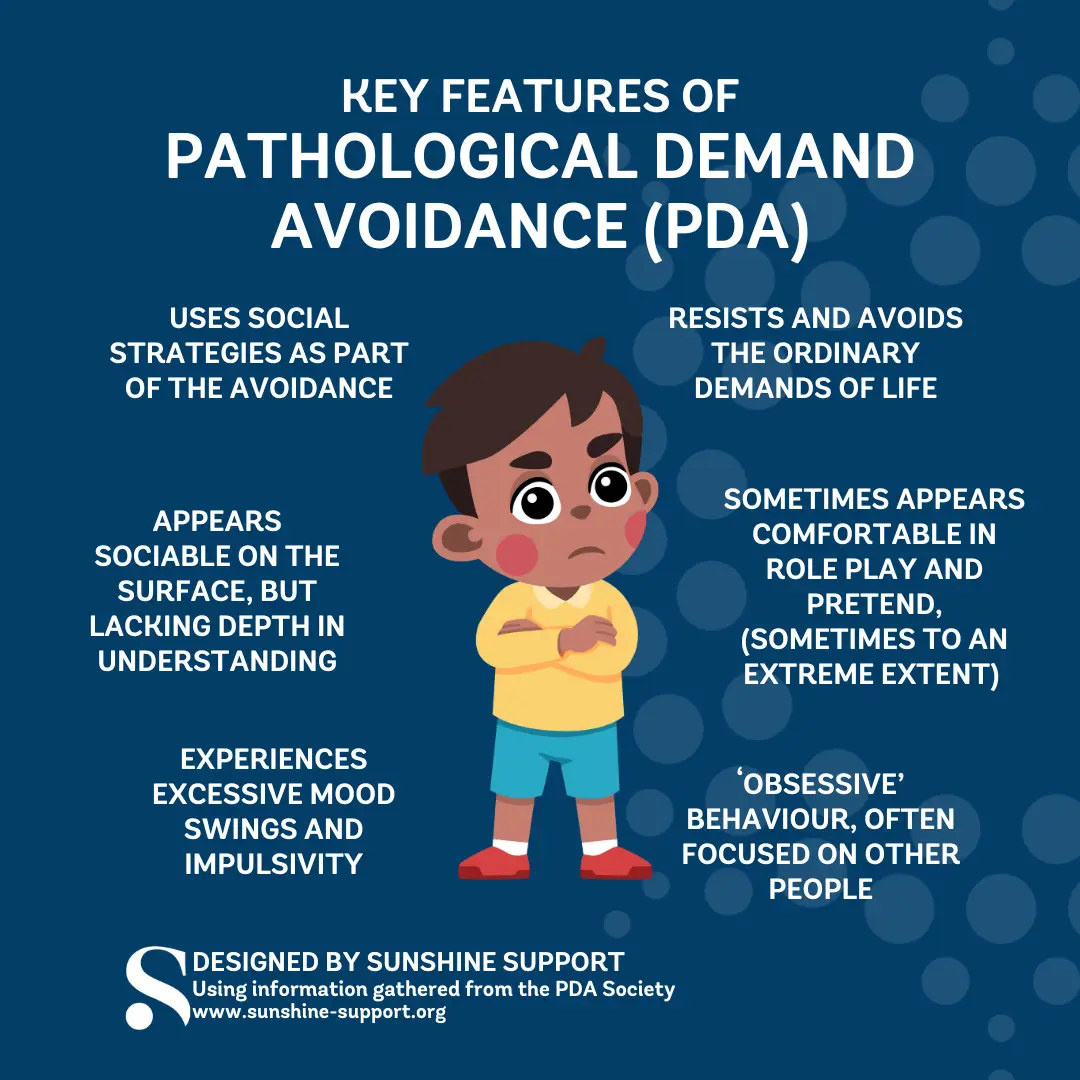
CHILDREN WITH PDA OFTEN SHOW PATTERNS LIKE:
- Resistance: Refusing to do tasks, like schoolwork or chores
- Social strategies: Using excuses, threats, or making others feel guilty
- Distraction: Getting distracted or pretending to be sick
- Meltdowns: Shutting down or having a meltdown when faced with a demand
- Obsessive behavior: Being fixated on a person or interest
- Fantasy: Using pretend play or role play to avoid demandsWhat am I doing wrong
- Difficulty sleeping
- Difficulty with self-care
- Difficulty regulating emotions
- Difficulty maintaining relationships
- Difficulty attending school or work
- Anxiety and panic attacks
These aren’t character flaws. They’re stress responses.
A FINAL NOTE: WHERE THIS COMES FROM, AND WHERE IT CAN TAKE YOU
For a long time, I believed I was doing the work.
I wasn’t failing because I wasn’t smart enough, strong enough, or committed enough. I was failing because the system I was using no longer matched the reality of our neurodivergent family.
I wasn’t listening well enough. I wasn’t adequately skilled for the challenges we were facing. Most importantly, I wasn’t recognizing how exhausted my wife had become while waiting for me to truly engage.
Working with At Peace Parents became one of the most transformative investments our family has made. This isn’t an endorsement of a specific company or program. The larger lesson is that many caregivers remain stuck not because they don’t care, but because they lack the knowledge, confidence, and practical skills needed to navigate complex family dynamics.
What changed my trajectory wasn’t discovering a perfect solution. It was committing to learning. Whether that learning comes through coaching, books, therapy, community, mentorship, or another pathway entirely, intentional growth matters.
- Skills create options.
- Options create confidence.
- Confidence creates action.
- Curiosity instead of control
- Steadiness instead of force
- Connection instead of escalation
- Conviction instead of compliance
I WANT MOTHERS TO HAVE A PLACE THEY CAN POINT TO AND SAY:
“If a tech‑driven, long‑course Ironman‑training, logic‑oriented dad like him can learn to show up differently, then other fathers and/or caregivers can too. Not perfectly. Not instantly. But intentionally. And right now, intention is the thing I’m asking for — because I can’t keep doing this alone.”
A CONTINUING PRACTICE, NOT A FINAL ANSWER
Part of my hope in sharing this journey is that more fathers, caregivers, and partners move from observation to participation. Not perfectly. Not without mistakes. But with a willingness to learn, adapt, and become the steady support their children and co-caregivers need.
When we begin viewing PDA and other neurodivergent experiences through a lens of nervous-system realities rather than defiance, the entire landscape changes. What once looked like opposition often reveals itself as overwhelm. What felt confusing begins to make sense. Growth becomes possible. Relationships strengthen. Homes become safer and more affirming places for everyone involved.
This page is not medical advice, a diagnostic resource, or a substitute for qualified professional support. Consider it a starting point. A place to explore ideas, discover resources, and identify questions worth pursuing with trusted professionals, coaches, educators, and healthcare providers.
- Our family is still learning.
- We’re still adapting.
- We’re still recalibrating.
May this page help you find the knowledge, confidence, and support that helps your family take its next step forward.