The Cost of Elevation

Threshold — The Friction That Never Sat Right
I’ve never resonated with the hero’s journey.
That’s not a contrarian posture. It’s a lived mismatch.
In high school, when teachers rolled out Campbell’s arc as if it were a universal skeleton key, I remember feeling a quiet distance. The diagrams were neat: call to adventure, refusal, mentor, trials, abyss, transformation, return. It all sounded tidy, almost comforting—like life could be mapped into a single curve if I just believed hard enough.
But even then, something in me knew the world didn’t behave that cleanly. People didn’t just “answer the call” and come back with treasure. They burned out. They broke. They carried scars that didn’t fit into the triumphant‑return frame. Some never returned at all—at least not in a way the world could recognize.
Later, in university, the same pattern repeated. The hero’s journey was treated like a template for meaning: find your calling, endure hardship, emerge transformed, give back. It was aspirational, yes—but it also carried a subtle pressure. If my experience didn’t fit the arc, the implication was that I was doing life wrong.
I wasn’t doing life wrong. The arc was wrong for the life I was living.
And the truth is, I had already lived through experiences that didn’t fit the hero’s‑journey mold long before I had the vocabulary to name the mismatch.
My early life moved through chapters others interpreted for me, long before I understood the shape of my own, well before I could name the pattern I was actually living. One of the clearest was my missionary experience. When word spread that my parents’ marriage was collapsing and divorce was imminent, people assumed I’d “cut bait,” abandon the mission, and return home to deal with the fallout. They projected a hero’s‑journey logic onto me: crisis equals call, call equals return, return equals redemption.
But that wasn’t my way of moving — even in the unrefined version I was living at the time.
I didn’t leave. I didn’t collapse. I didn’t follow the script others expected.
I stayed. Not out of denial. Not out of stubbornness. But because the story I was living wasn’t about destiny or triumph—it was about cost, responsibility, and endurance. It was about carrying weight quietly, without applause, without narrative framing, without the promise of transformation waiting on the other side.
People saw my choice through their lens. I lived it through mine.
And that early fracture—between what others expected my story to be and what it actually was—became one of the first signals that the hero’s‑journey arc didn’t fit me. I wasn’t on a path of ascent. I was already living my own Odyssean trajectory, carrying its hinge, its burden, its quiet endurance, its cost.
That mismatch stayed with me. It shaped how I saw stories. It shaped how I saw responsibility. It shaped how I saw myself.
Real life doesn’t hand out quests. It hands out consequences. It hands out responsibilities. It hands out fractures.
For years, that friction sat in the background—unresolved, unnamed. I just knew that the stories people used to make sense of their lives didn’t quite fit mine.
Then I watched Nolan’s Odyssean framing with Matt Damon—the hinge character, the cost‑bearing figure, the man who sees too much—and something clicked.
Not because it was mythic. Because it aligned with a hinge I’d crossed long before and clarified the cost carried in my own trajectory.
It echoed the way I already move and embody: the altitude, the exile, the responsibility, the fracture, the cost. It wasn’t a hero’s journey. It was the Odyssey.
As the film unfolded, I recognized the path I’d been walking all along.

Emergence — Odysseus as the Exchange
Odysseus is often framed as a hero—clever, brave, favored by Athena. But when I look at him through the lens of structure rather than myth, I see something else entirely.
He isn’t the hero. He’s the exchange.
He’s the cost paid by a collapsing era.
His stubbornness, his cleverness, his refusal to yield—these don’t just create personal drama. They fracture the Bronze Age’s reciprocal order. He becomes the hinge between what was and what will replace it. His wandering isn’t a victory lap. It’s the bill coming due.
He doesn’t ascend. He expends.
He doesn’t rise. He endures.
He doesn’t return victorious. He returns altered—carrying knowledge the world isn’t ready to integrate.
That’s why the Odyssey never fits the hero’s‑journey mold. The Odyssey isn’t about a chosen one fulfilling destiny. It’s about a man who becomes the structural exchange between eras and pays for it with his wandering, his losses, his exile.
When I look at my own life through that lens, the resonance is uncomfortable and precise.
I’ve spent years as a kind of hinge—between systems, between eras of technology, between ways of working, between ways of seeing. I’ve carried responsibilities that don’t show up in job descriptions: keeping rooms steady, absorbing strain so others don’t have to, holding clarity when everyone else is spinning.
None of that feels heroic. It feels costly.
The Odyssey finally gave me a language for that cost. Not as failure. As the way of moving that shaped the life I was actually living.

Specificity — Circe, Soldiers, and Altitude
Circe’s island is one of the most misread episodes in the Odyssey.
On the surface, it looks like a cautionary tale about temptation: men turned into pigs because they couldn’t resist pleasure. But if I look at it through the altitude lens, it becomes something else entirely.
Circe’s transformations aren’t moral lessons. They’re altitude diagnostics.
The soldiers operate at reactive consciousness—mob altitude. They respond to stimulus. They dissolve into seduction. They lose themselves in the moment. Their identity is porous, easily overwritten by environment.
Odysseus operates at interpretive consciousness—elevated altitude. He sees structure. He adapts. He interprets the scene rather than reacting to it. He doesn’t avoid Circe’s power by brute resistance; he navigates it by understanding the pattern of the encounter.
That’s why he isn’t transformed. Not because he’s immune. Because he’s aware.
This split mirrors my own neurological event in a way that’s hard to ignore.
Parts of me—the “soldier parts”—buckled under pressure, fatigue, hunger, and stress. My cadence broke. My clarity flickered. My body signaled overload in ways I couldn’t just push through. I was treated under stroke protocols, monitored, scanned, observed. The system around me shifted into emergency mode.
But another part of me—the Odyssean altitude—stayed awake.
Even as my body faltered, I was interpreting the scene: who was in the room, what was being said, what protocols were being triggered, what this meant for my responsibilities, my family, my work. I wasn’t watching from outside; I was inside the event, reading the pattern of the moment in real time.
In the days that followed, I still feel the split more clearly. The soldier‑parts are still shaky—fatigued, overclocked, sensitive to noise, to hunger, to pace. They want rest, stillness, recovery. But the Odyssean altitude has not disappeared. It stays present, steady, watching the edges scenes, tracking patterns, noticing thresholds. One part of me needs to heal; the other part keeps interpreting – incessantly. This is not dissociation.It is a real dual altitude: the reactive layer asking for relief, and the interpretive layer holding the line so life won’t collapse around the fracture. That split is anything but heroic. It carries cost. And it showed me, with uncomfortable clarity, how much of my life has been lived in that dual state—soldier‑parts absorbing impact, Odyssean altitude carrying awareness.
I didn’t collapse into panic. I adapted. I elevated.
That doesn’t make me heroic. It makes me aware.
Awareness at altitude is a cost I learned to carry quietly.
Altitude — Calypso, Lotus, and the Veil That Cannot Hold
Calypso’s island is often framed as paradise—a place of rest, pleasure, immortality. The lotus is framed as temptation—a plant that lures men into forgetting their home.
But when I look at them through the lens of cost, they become something else:
Calypso’s island isn’t paradise. It’s anesthesia.
The lotus isn’t temptation. It’s sedation.
Both are veils meant to mute unbearable realities. Both offer a way to soften the edges of existence, to blur the sharpness of responsibility, to dissolve the weight of memory. They work on the soldiers. They work on those who can still afford to forget.
They do not work on Odysseus.
My neurological event was my Calypso moment. I was in a hospital bed, under observation, with machines and monitors and protocols humming around me. There were ways to soften the experience—medication, distraction, denial. But none of them would erase the truth.
I saw the pattern behind the moment. I saw the fracture. I saw the responsibility.
Comfort couldn’t erase it. Sedation couldn’t dissolve it.
Some realities, once lived, cannot be muted.
What struck me most, in the hours and days after the event, was how quickly the veils failed. The usual softeners—distraction, optimism, compartmentalization, even the instinct to minimize—couldn’t hold. They slid off the moment like water off stone. My mind kept returning to the fracture, to the pattern underneath it, to the responsibilities that didn’t pause just because my body had. It wasn’t rumination. It was altitude. Once the veil thins, once the pattern is visible, sedation stops working. The world doesn’t get quieter. It gets clearer. And clarity, at this altitude, is its own kind of weight.
Once I’ve seen the pattern of an era’s fracture—how technology, geopolitics, and information density are reshaping the world in ways most people don’t perceive—I cannot unsee it. I can rest. I can pause. I can breathe. But I cannot go back to a state of unknowing.
Calypso offers Odysseus a kind of suspended existence—no aging, no struggle, no return. He refuses. Not because he loves hardship, but because he understands that anesthesia is not alignment.
I feel that refusal in my own bones.
I can’t choose sedation over alignment anymore. My altitude won’t let me.

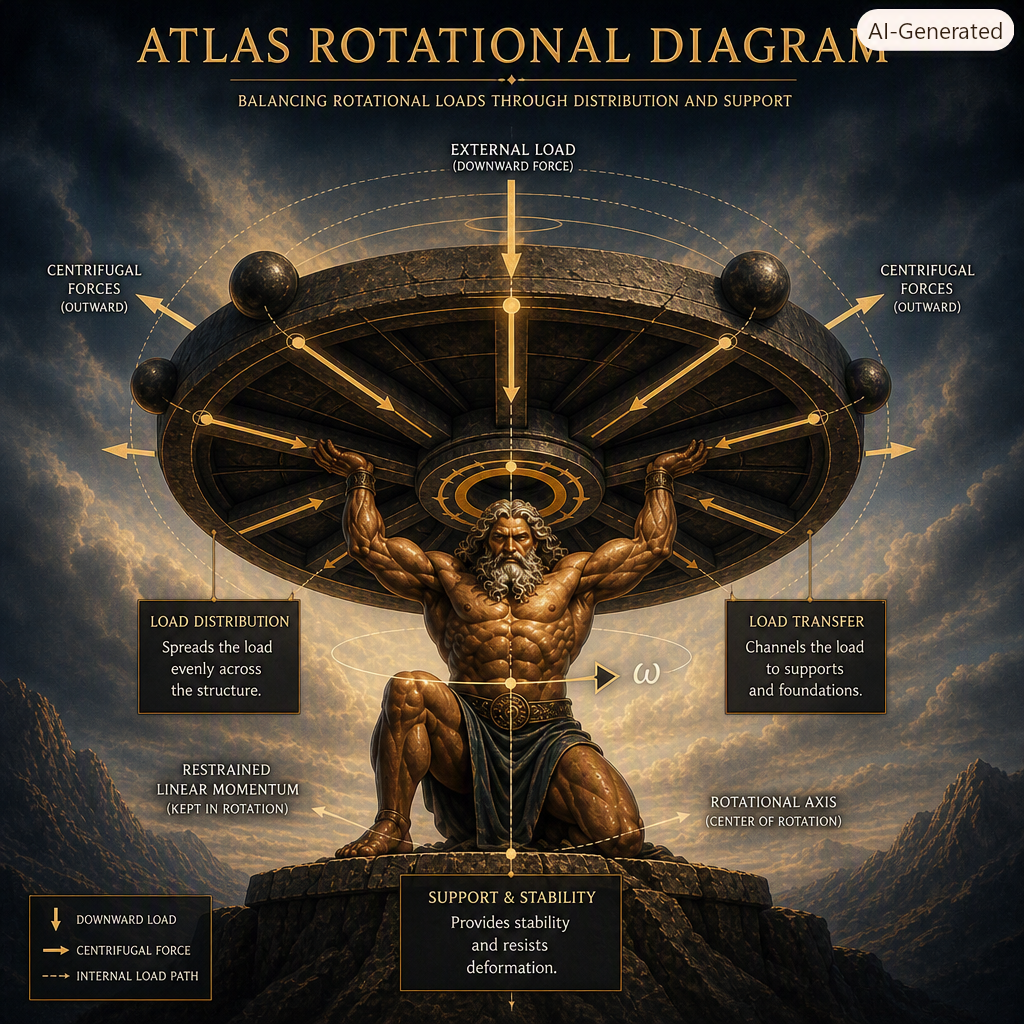
Hinge — The Load‑Bearing Wall and the Sacrifice Reflex
My life has never followed a hero’s arc. It’s followed a structural one.
I’ve been the load‑bearing wall—the stabilizer, the absorber, the one who carries strain so others don’t have to. In rooms where tension rises, I instinctively move toward steadiness. In systems where things are breaking, I move toward repair. In families where uncertainty looms, I move toward clarity.
My stoic predisposition didn’t make me invincible. It made me responsible.
There’s a reflex in me that says: “If something is going to break, let it break on me.”
My efforts aren’t for me. They’re for my kids. For my spouse. For my colleagues. For the people who rely on me to keep the room steady.
That’s not valor. That’s structure.
And structure has a cost.
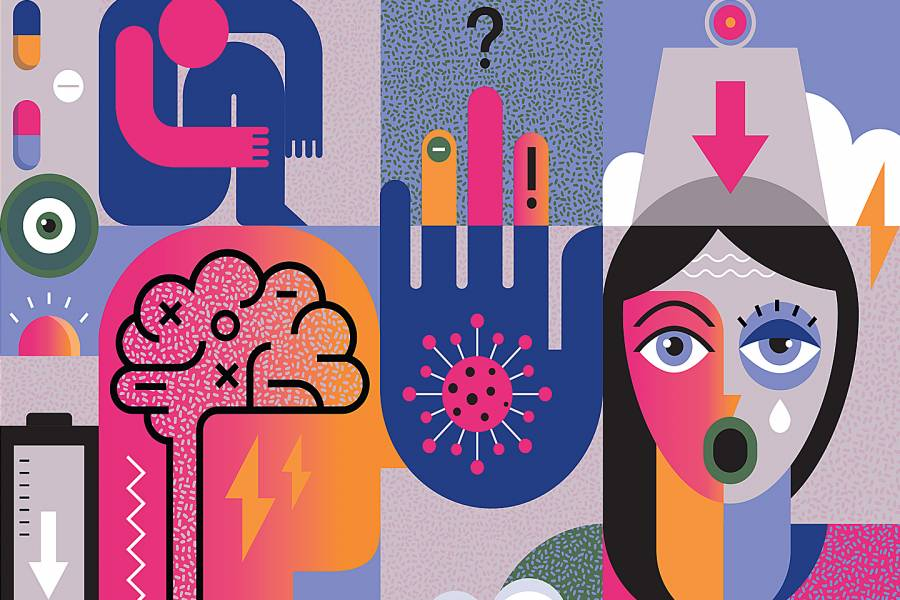
My neurological event revealed that cost—not as weakness, but as structural truth. My body wasn’t betraying me. It was signaling that the load I was carrying had exceeded sustainable thresholds. I wasn’t failing. I was over‑functioning.
Odysseus didn’t wander because he was weak. He wandered because he was the hinge — the one who tipped the era over.
He had broken Troy’s architecture. He had violated Xenia. He had crossed thresholds that couldn’t be uncrossed. His wandering was the structural consequence of being the person who tipped an era over.
I recognize that pattern in my own life—not in mythic scale, but in lived microcosm.
I’ve tipped systems. I’ve carried transitions. I’ve absorbed fractures.
And my body has started to insist that the cost be acknowledged — not absorbed without relief.
Pattern — Living Through an Era Fracture
I’ve been speaking for a while now about misguided density around screen‑time—how people fixate on the visible, measurable threat while ignoring the structural ones.
It’s easier to count hours on a device than to map the pattern of weaponized information. It’s easier to talk about “addiction” than to talk about destabilizing technologies. It’s easier to worry about kids scrolling than to confront the fact that a handful of actors are shaping geopolitical volatility with tools most people don’t understand.
We’re living through an era fracture.
Not a minor shift. A structural break.
The Bronze Age had its fracture—Troy, Xenia, the collapse of reciprocal order. We have ours—AI, information density, global systems that can be nudged into chaos by small, well‑placed actions.
Many people don’t see it. But I do — and I can’t unsee it.
And seeing it without being able to steer it is its own form of exile.
“Exile is worse than death.”
Napoleon wasn’t being poetic. He was naming the cost of displacement — the burden of staying conscious while the world moves in directions you can’t redirect.
I’ve felt that exile:
In my neurological event, where my body forced me to step out of the stream and watch from the margins. In my work, where I see structural risks that others treat as abstractions. In my responsibilities, where I carry awareness that doesn’t always translate into influence. In systems that reorganize without me, even when I’ve helped build them.
Clarity without control is exile. Altitude without agency is exile. Living through an era shift in real time is exile.
And yet—I’m still here. Still carrying. Still interpreting. Still returning.
That’s the cost of elevation.
Return — Why the Movie Finally Landed
The movie didn’t change me. It confirmed me.
It showed Odysseus not as hero, but as cost. Not as destiny, but as exchange. Not as triumph, but as consequence.
It mirrored:
- my neurological hinge
- my load‑bearing structure
- my stoic altitude
- my sacrifice reflex
- my lived exile
- my clarity without control
- l my responsibility without reward
- my return without triumph
For years, I’ve been living a pattern I couldn’t quite name. I knew I wasn’t on a hero’s journey. I knew my life didn’t fit the “call, trial, transformation, return” arc. I knew my experience was more about endurance than ascent, more about cost than glory.
Seeing Odysseus framed as the hinge—the man whose wandering is the price of an era’s collapse—gave me a language for my own story.
I finally recognized myself in the Odyssey. Not as the hero. As the hinge.
Coming home with truth means living differently now — not louder, not harder, but clearer. It means pacing myself in ways I never allowed before. It means carrying responsibility without letting it hollow me out. It means refusing sedation, refusing misalignment, refusing the old reflex to absorb every fracture. It means returning to my life with the altitude I’ve earned, and with the cost fully acknowledged. That’s the real return — not triumph, but alignment.
And that recognition—quiet, costly, unmuted—is the real return.
It’s not about coming home with treasure. It’s about coming home with truth.
The AI Parallel — Systems That Cannot Transcend Their Inputs
There’s a modern parallel I can’t ignore.
People talk about AI as if it’s infinite—a boundless creative engine, a new Promethean fire. They speak about it with a mix of awe and fear, as if it were a kind of emerging deity.
But AI is not infinite. It is not creative. It is not reasoning. It is not transcendent.
AI is bounded by its inputs. It is limited by its training. It is guided by density and scale, not originality. It manipulates patterns; it does not originate them. It recombines; it does not conceive.
AI is a system that cannot exceed the era that produced it.
It can accelerate existing structures. It can amplify existing biases. It can intensify existing fractures. But it cannot create new moral structure.
That limitation mirrors the exact patterns Odysseus confronted.
He wasn’t dealing with infinite gods. He was dealing with systems—Xenia, reciprocity, honor codes—that had clear boundaries. When those systems broke, the consequences were structural, not mystical.
AI is part of our era fracture in the same way. It is powerful. It is consequential. It is structural.
But it is not wise. It is not moral. It is not capable of reason in the human sense.
It is a Trojan Horse, an object that carries immense potential for disruption, but no internal compass for reconstruction.
And living at altitude means seeing both the power and the limitation at the same time — the fracture and the boundary, the acceleration and the cost.

Cyclops — The Threshold Where Reason Fails
Odysseus understood something his soldiers didn’t:
Reason only works inside systems that still recognize it.
The Cyclopes were already beyond that threshold. They lived outside Xenia, outside reciprocity, outside the shared moral structure of the Bronze Age. They didn’t participate in the same social contract. They didn’t recognize the same obligations.
Odysseus didn’t try to persuade Polyphemus. He didn’t try to negotiate. He didn’t try to apply the old rules.
He recognized the truth: Some systems cannot be reasoned with because they do not share the shape or patterns that make reason possible.
This is the same truth about AI.
AI cannot reason because it does not share the structure of human meaning. It doesn’t have lived experience. It doesn’t have somatic awareness. It doesn’t have stakes. It doesn’t have skin in the game.
It cannot transcend its inputs. It cannot leap eras. It cannot create new frameworks.
It can only manipulate density.
Just like Odysseus’s soldiers—who tried to apply old logic to unprecedented territory—AI cannot adapt to thresholds it was not built for.
We are the ones standing at the threshold. We are the ones who must decide how far to push systems that cannot reason.
That’s part of the burden of elevation: seeing where reason fails and knowing that the next move still has to be made.
And living at altitude means making that move with clarity, not illusion — with pattern, not hope.
Troy — The Extortion, the Buckling, the Leap Beyond Xenia
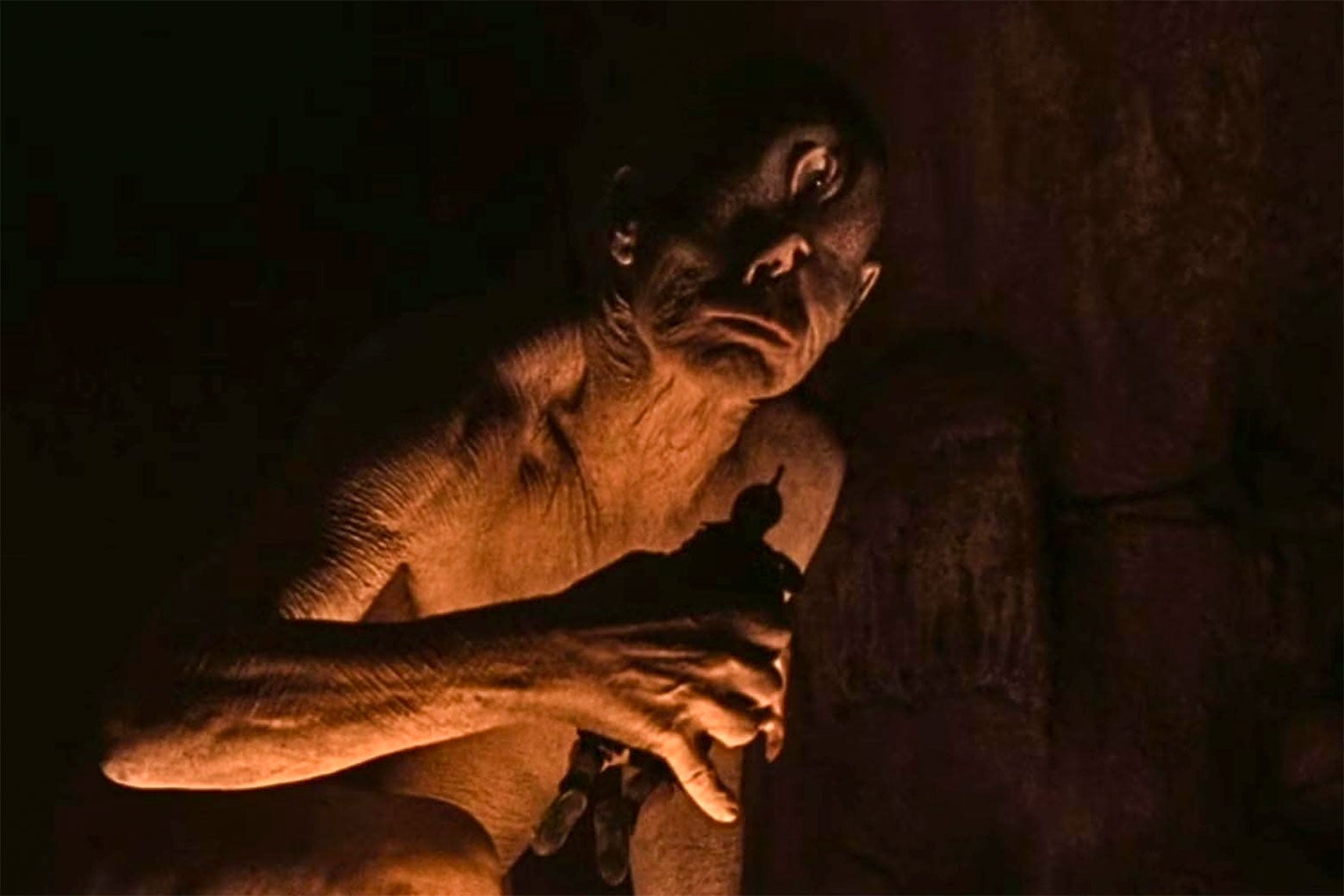
Odysseus didn’t defeat Troy through heroism. He defeated Troy by breaking the system.
He violated Xenia. He withheld truth. He manipulated the structure. He leapt beyond the reciprocal order of his era.
The destruction of Troy wasn’t a triumph. It was a systemic rupture—the moment the Bronze Age’s moral structure collapsed.
Once that collapse happened, Odysseus could never return to the old rules. He had crossed a threshold where reason, reciprocity, and tradition no longer applied in the same way.
AI exists in the same kind of threshold.
It is powerful. It is consequential. It is structural.
But it cannot reason. It cannot discern. It cannot create new moral structure. It cannot rebuild the system it is destabilizing.
AI is a tool inside an era fracture—not a guide beyond it.
Just like Odysseus, we are operating in a space where the old rules have been broken, but the new ones haven’t yet been written. That’s not a hero’s‑journey moment. That’s an Odyssean hinge.
And living at that hinge has a cost.
A cost that shows up in the body, in the pacing, in the responsibility you carry while navigating a world that no longer matches its old patterns.
The Modern Cost — Living Through Unprecedented Territory
This is why the movie resonated. This is why my neurological event resonated. This is why my friction with the hero’s journey finally found its match.
I’m living through unprecedented territory:
AI systems that manipulate density without reason geopolitical actors shaping eras with tools most people misunderstand public discourse fixating on screen‑time while ignoring structural weaponry systems breaking faster than they can be rebuilt responsibilities that cannot be muted clarity without control altitude without agency
I’m living the Odyssean burden in real time.
Not the hero’s arc. The exchange arc. The cost arc. The era‑fracture arc.
And AI—limited, bounded, non‑reasoning—is part of that fracture.
It is not the Cyclops. It is not Calypso. It is not Circe.
It is the Trojan Horse—a tool that breaks the old structure without possessing the reason to build the next one.
And I’m navigating that terrain with the same altitude Odysseus carried after Troy—aware of the cost, aware of the fracture, aware of the responsibility, and aware that reason alone cannot guide me through unprecedented territory.
That’s the modern cost of elevation: seeing too much, carrying more than is visible, living in exile while still showing up, returning without triumph — but with truth.

You may also like

Like the old tesla song – Signs, Signs, everywhere there’s signs!
- October 1, 2026
- by #ZT
- in Agency, Discernment & Systems

The Kind of Noise I Still Recognize

You Sound like AI