When the Rules Change Quietly: Notes From an Old Logan Neighborhood
The Subtle Art
Some neighborhoods grow. Ours doesn’t. Thrushwood–Sumac is one of the oldest pockets in Logan — well‑established, rooted, settled. The trees know the history better than any of us. The streets have their own memory.
So when something shifts here, it’s not because of growth. It’s because of change — the slow, cultural kind that sneaks in sideways.
Logan City quietly updated its noise ordinance language from enforced to prohibited. No announcement. No conversation. Just a quiet rewrite in the municipal code library — the kind of thing you only catch if you’re the sort who checks those things on purpose.
We’ve kept up. We’ve monitored. We’ve tried to stay ahead of the curve. And still — the ground moved under our feet.
That’s the thing about old neighborhoods: the rules don’t change often, but when they do, it’s usually without warning.
The Rooster Era: A Reminder That We Once Survived Worse
Before ordinances, before “prohibited,” before the era of performative niceness, we had a rooster. Not a metaphor. A literal rooster. A mis‑sexed “hen” that turned out to be our first accidental alarm clock.
The bird wasn’t unbearable. We did the work — talked to every neighbor we could reach. Most shrugged and said, “We’re two streets from the country roads, so… awesome.” Old‑Logan logic: if you live near the edge of the valley, you accept the occasional feathered nonsense.
But one neighbor was gone for the summer. And the day they returned was the exact day the rooster found its crow. Perfect timing. Cosmic comedy. Or cosmic timing with teeth.
That’s when the fit hit the shan. When the claims of autonomy and freedom hardened into control and a full‑throated me first — fast, loud, and without a hint of self‑awareness. The kind of turn where the air tightens, the eyes go hot, and everyone feels the shift even if no one names it.
First an anonymous complaint. Then a Facebook complaint. I was the first to see it and respond — “Hey, what’s the problem? That’s our bird.” But the new Logan trend was already in full swing: performative shaming instead of conversation, public outrage instead of neighborliness.
Before their tirade of threats even wrapped up, we already had a rehoming path lined up. But that didn’t stop the ultimatum: “You will deal with this within 24 hours.”
And all of this was happening right as life was getting heavier. I was beginning my mindset shift. The triathlons were real. The responsibilities were stacking fast. And we were just coming to the conclusion that our second would soon have another sibling — without the help of science. A surprise. A blessing. A weight. A recalibration.
So the rooster wasn’t just a neighborhood inconvenience. It was the backdrop to a season when everything in our world was shifting at once — identity, family, expectations, capacity.
The irony? The couple who issued the ultimatum divorced soon after. And we became the target of the spillover — the stress, the projection, the misplaced fury.
Messy. Human. Unpolished. But the neighborhood handled it — or at least survived it — because people still talked to each other back then.
Exactly the thing we’re missing now.
The Drift, Named Plainly
If you name the drift plainly, you can diagnose it.
What’s happening here isn’t new, and it isn’t subtle. It’s the thing every long‑timer in Cache Valley eventually feels in their bones: the valley isn’t growing faster than its civic habits — its civic habits are just aging out faster than people are willing to notice. And when that happens, the little things start talking. The rolled stop signs. The kids on e‑bikes with no sense of physics or place. The doorbell‑ditching. The brittle neighborhood etiquette. They’re not annoyances. They’re early‑warning indicators — hairline cracks in a community that used to know how to people, how to talk, how to show up without performance or posturing.
Our neighborhood isn’t expanding. It’s just… shifting. Not in population, but in posture. People are less willing to “people.” Less willing to be neighbors in the old sense of the word. More willing to warden — to enforce vibes, expectations, and appearances — while staying performatively nice. The smile stays. The authenticity doesn’t.
You can feel it in the way folks roll through the stop signs like the rules are for someone else. You can feel it in the kids on e‑bikes who treat the street like a runway because no one’s taught them otherwise. You can feel it in the doorbell‑ditching that’s less mischief and more boundary‑testing.
None of this is about growth. It’s about attention — or the lack of it. This is drift.
Where Systems Drift, ADKAR Shows the Gaps
A — Awareness
People sense something’s off, but they can’t name it. They feel the friction — the noise, the rolling stops, the performative niceness — but they don’t connect it to a broader shift in neighborhood culture.
D — Desire
This is where the gap yawns wide. Folks want peace and order, but not enough to change their own habits. They want quiet streets but won’t slow down. They want community but won’t engage authentically. They want norms without the work of neighborliness.
K — Knowledge
Most residents don’t know the ordinance changed. They don’t know the expectations. They don’t know the impact of their behaviors on an old neighborhood’s acoustics, rhythms, or safety.
A — Ability
Even when people know better, they don’t always do better. Ability requires practice — full stops, mindful noise, teaching kids how to ride e‑bikes with awareness. Ability is the muscle memory of community.
R — Reinforcement
This is where old neighborhoods thrive or die. Reinforcement used to come from neighbor‑to‑neighbor accountability — the quiet, steady expectation that we all show up for each other. Now it’s more fragmented. Some people reinforce norms. Some people enforce vibes. Some people enforce nothing.
ADKAR isn’t a corporate tool here. It’s a mirror — showing where the social fabric thins, where the gaps widen, and where the work actually is.
The Ordinance Shift Is Just a Symptom
The city’s noise rules didn’t disappear; they just changed tone. What used to be a sequence of warnings and citations is now framed as a condition that simply must not exist. A prohibited state. A line drawn in the code rather than on the street.
It’s subtle. It’s quiet. It’s very Logan.
But the real story isn’t the ordinance. It’s the way people behave around it.
ADKAR shows us the truth: systems drift when people stop reinforcing the norms that hold them together.
Our Home Won't Be Moving. It’s About Choosing.
We’re not building a new house. We’re building a new home — inside the same walls, on the same street, under the same old trees.
And that means choosing how we show up.
So we’ll keep doing our best. We’ll keep growing — not because the neighborhood is growing, but because we are. We’ll keep modeling the things we hope to see:
-
Full stops at the stop signs, even when others don’t bother.
-
E‑bike expectations that teach kids how to share space, not dominate it.
-
A little more awareness after dark, because sound carries differently in an old neighborhood.
-
A little more authenticity, because performative niceness doesn’t build community — real presence does.
-
Reinforcement, the ADKAR kind, the neighborly kind, the kind that makes a place feel like itself again.
Neighborhoods don’t get better because rules change. They get better because people decide to be neighbors again.
Change isn’t the enemy. But it does reveal who’s paying attention.
And we are.
A snap shot of the drifts
The short version: Logan’s noise rules have quietly evolved from enforcement-based (warnings → citations) to a more categorical “noise disturbances prohibited” framing in the municipal code. The city’s 2023 update to §10.52.270 still focuses on vehicle noise and idling limits, but the broader Chapter 8.16 “Noise Disturbances; Prohibited” language is now the umbrella standard. That chapter defines noise disturbances broadly and prohibits them outright — not just as enforceable nuisances but as prohibited conditions in themselves.
The city “shifted from enforcement to prohibited”: the code now treats noise as a condition to avoid, not just a behavior to cite.
What actually changed (and why it feels sneaky)
-
-
- Vehicle noise rules were updated in Ordinance 23‑12 (2023). They still cap noise at 85 dB at 50 feet and limit idling to 2 minutes except in extreme cold. Enforcement is “primarily educational” and requires three warnings before a fine.
- General noise disturbances, however, fall under Chapter 8.16, which uses the stronger “prohibited” language. This is where the shift happened. The city didn’t loudly announce it — they simply updated the code library.
-
So yes: you can be monitoring the usual channels, watching council agendas, and still miss it. Logan’s ordinance updates often appear only in the “Ordinances” archive after passage, not in public-facing summaries.
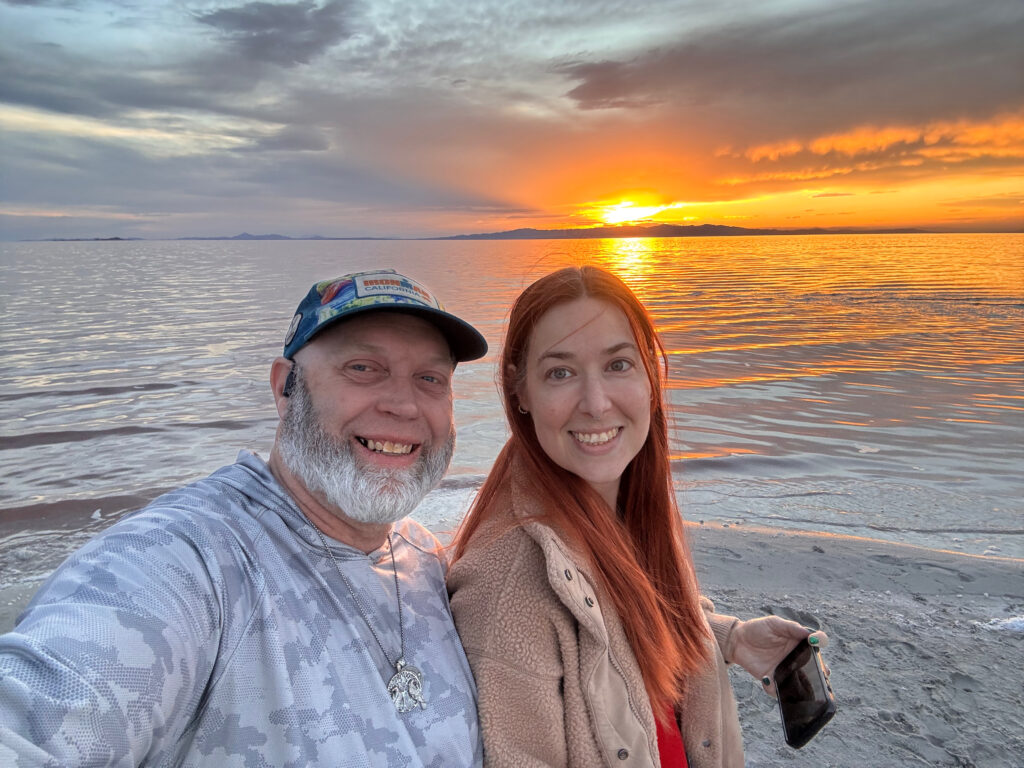
Neighborhoods remember how we show up.
It all begins with a line from Walt Whitman – “Be Curious – Not Judgmental!”
Seeking a new home. A neighbor got sick of our rooster and decided to report him (anonymously). He’s gorgeous. He’s a salmon favorelle. I am in Logan if somebody would like him. He’s a good teacher, just learned a lot about city ordinances, change, enforcements vs. prohibition and so much more!


You may also like

A FB Memory Reflection
- October 25, 2026
- by #ZT
- in Agency, Discernment & Systems


The Kind of Noise I Still Recognize