Driving From the Rearview: A Stoic Field Note on Discernment, Pressure, and the Work of Staying Human
The Moment I Didn’t Want to Have (Temperance)
The moment that stopped me wasn’t dramatic. It was my 10‑year‑old asking, “Can you get me a drink?” A simple request. A normal one. The kind a kid her age should feel safe making.
And I had to say no.
Not because she didn’t deserve the help. Not because she needed to “learn independence.” But because I was at my limit — drained by a workday spent absorbing tasks, decisions, and emotional labor that should never have landed on my plate in the first place.
That’s the part that hit me: the child who genuinely needs my presence is the one I’m forced to ration it from, while adults who should be self‑sufficient continue to offload their responsibilities because the system allows it.
Temperance isn’t just restraint. It’s right allocation of attention. And in that moment, the allocation was wrong — not because of my values, but because of the pressures distorting them.
The system calls it neutrality. I feel it as weight.
This is where the drift begins. Not in the dramatic moments, but in the small ones — the ones where the cost shows up in my own home.
The Load‑Bearing Years (Courage)
These days I feel the weight before I even name it. Kids from twenty down to six. Aging parents navigating MS, cancer, dementia. In‑laws wrestling with their own declines. A family system stretched across four generations, all of it quietly leaning in my direction.
No one prepares you for this phase — the moment when you realize you’re not in the middle of the sandwich generation, you’re the load‑bearing beam holding the structure upright.
Courage here isn’t dramatic. It’s not cinematic. It’s not the kind anyone applauds.
It’s the courage of continuity — showing up again, and again, and again, even when the bandwidth is gone and the margin is thin. It’s the courage of presence, even when presence costs something. It’s the courage of choosing the next right action, not because it’s easy, but because it’s required.
And this is where the tension sharpens: I’m expected to maintain clarity, discernment, and forward‑facing attention — the very capacities being eroded by the systems I work inside.
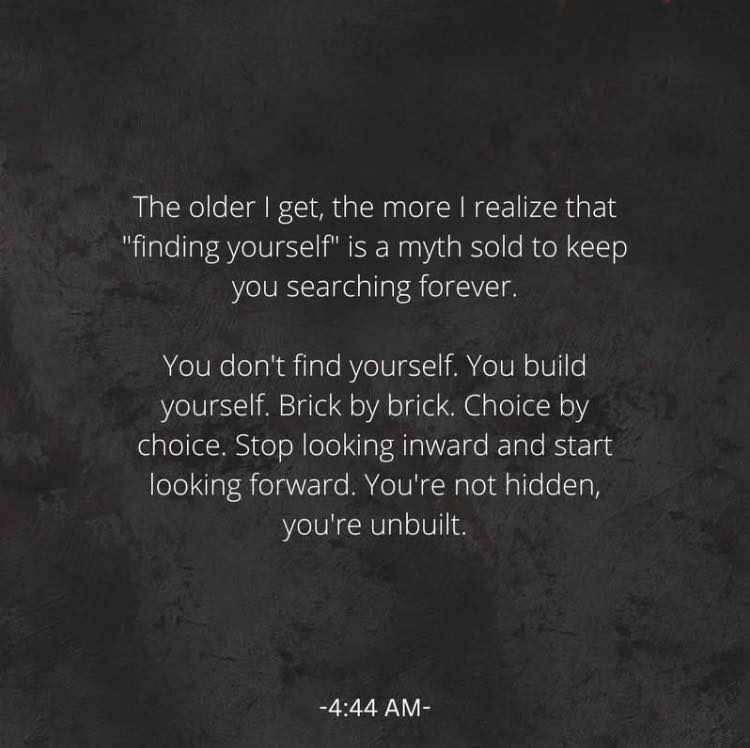
“Courage isn’t the roar. It’s the quiet willingness to hold what no one else sees.”
This is the backdrop to every small moment — including the one where I had to tell my daughter no. Not because I wanted to. But because the load had already been spent elsewhere.
Guardrails Only Work If the System Respects Them (Temperance + Justice)
I’ve built guardrails into my days because I have to. Walk. Reset. Recovery. Deep work. Small anchors that keep the internal system from drifting.
Tools like Viva Insights help me carve the space, but carving isn’t the same as keeping. The system doesn’t honor the boundary. People bypass corporate identity, ignore shared calendars, and drop meetings into the only protected blocks I have left — the blocks meant for breath, recalibration, or simply being human.
And here’s the part that stings: my daughter — the one who should get my attention — is learning to wait, not because she should, but because I’m depleted from supporting adults who should be able to support themselves.
This is where justice becomes more than a virtue. It becomes a diagnostic. A way of seeing imbalance clearly.
Justice asks: Is each thing receiving what it is due? Right now, the answer is no.
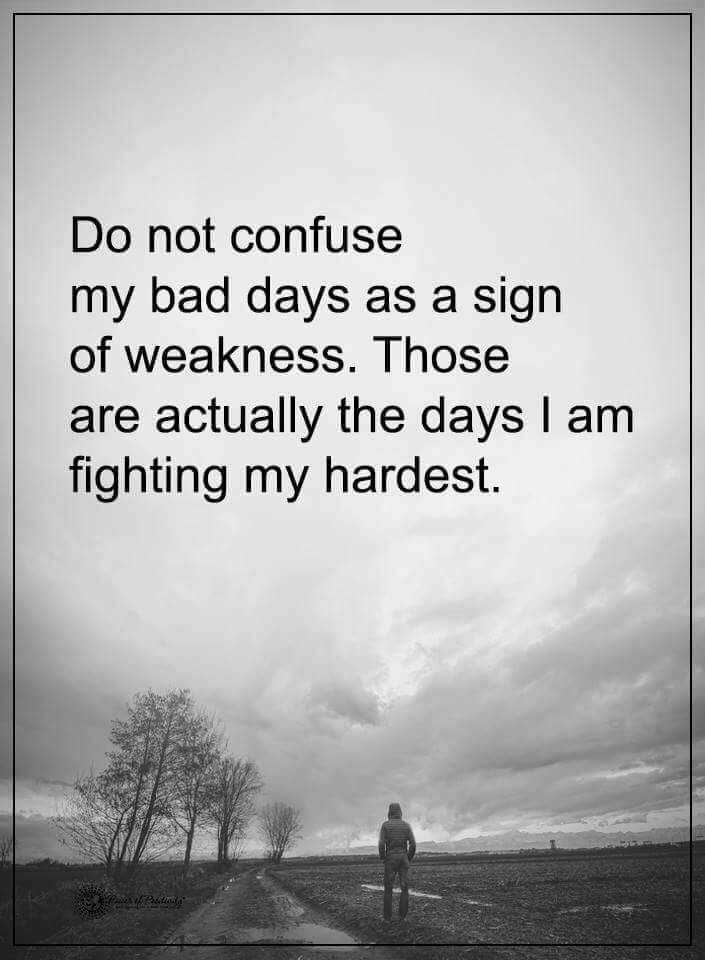
“A boundary isn’t a wall. It’s a recognition of what must be protected.”
The guardrails aren’t failing because they’re weak. They’re failing because the system keeps climbing over them.
The Elephant That Thinks It’s Neutral (Justice)
Desmond Tutu said it cleanly: When elephants fight, the grass suffers.
Lately, I’ve felt like the grass. Or the mouse under the elephant that insists it’s being neutral — unaware of the pressure it applies simply by existing.
The system self‑protects. The system optimizes for speed. The system rewards coherence over comprehension. And in that environment, the people who absorb the most weight are the ones who refuse to let things fall apart.
Every time I set a boundary, or refuse to carry someone else’s operational debt, I’m framed as friction — the slowdown, the impediment, the one “making things harder.”
But the truth is simpler: I’m naming the imbalance the system would rather not see.
Justice isn’t about punishment. It’s about proportion. It’s about ensuring the load is distributed in a way that doesn’t crush the people who are actually holding things together.
“Neutrality isn’t neutral when it lands on the same shoulders every time.”
This is the part no one wants to acknowledge: the system’s “neutral stance” has a weight, and that weight always finds the same people.
And I’m tired of pretending it doesn’t.
Rear‑View Leadership: The New Micromanagement (Wisdom)
What’s emerging in the workplace isn’t innovation. It’s a quieter, more insidious form of micromanagement — one that hides behind dashboards, metrics, and the illusion of efficiency.
AI didn’t create this pattern, but it accelerated it. We’re now living inside rear‑view leadership: decision‑making that stares backward, not forward.
It shows up like this:
- Decisions made from historical pattern‑matching instead of present‑moment discernment
- Speed elevated above depth
- Coherence mistaken for comprehension
- Creativity treated as an infinite tap
- Ambiguity treated as a flaw instead of a feature of reality
It’s leadership that believes the past is a map. It’s leadership that confuses prediction with wisdom. It’s leadership that treats uncertainty as a problem to eliminate rather than a condition to navigate.
People are steering the car by staring into the rearview mirror, convinced that because a model can autocomplete a sentence, it can also interpret a situation, a person, a moment.
But wisdom is forward‑facing. Wisdom requires presence. Wisdom requires the courage to see what is actually in front of you, not what the data says should be there.
Rear‑view leadership isn’t leadership. It’s pattern‑matching with authority.
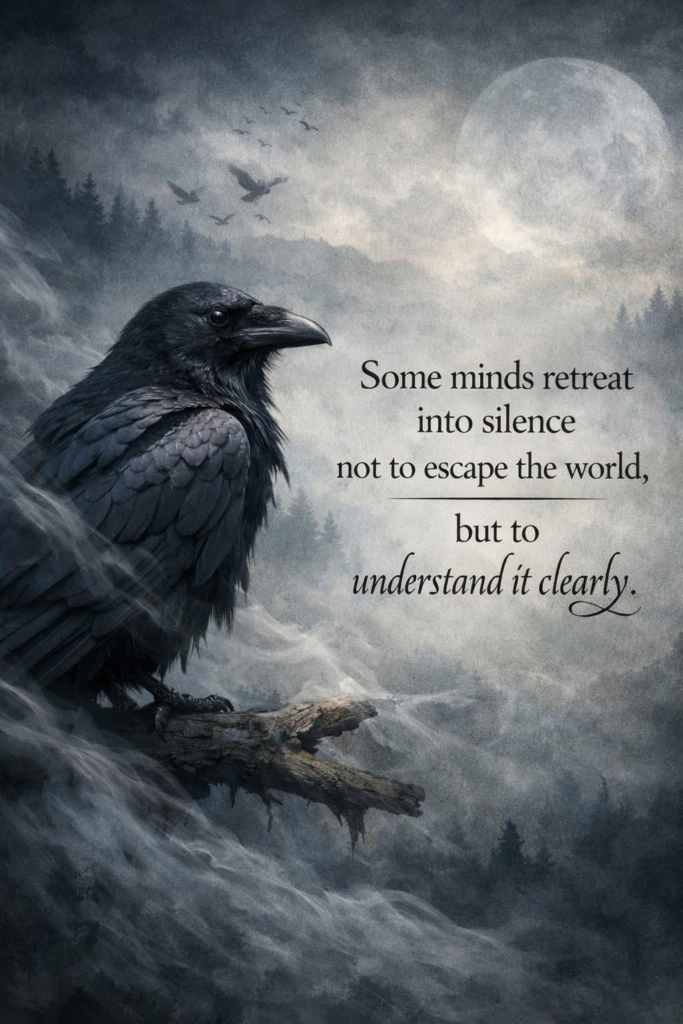
“Wisdom isn’t the ability to predict. It’s the ability to perceive.”
And in systems that reward speed over understanding, the people who still practice discernment become the outliers — the ones who slow down, ask questions, and refuse to rubber‑stamp decisions that don’t make sense.
The irony is that these are the very people the system needs most. And the very people it exhausts first.
Endurance ≠ Sustainability (Courage + Temperance)
I’ve done Ironmans. I know what it means to endure — to stay in motion when the body wants to stop, to keep the line when the mind starts bargaining. Endurance is familiar terrain.
But these days, I’m learning a harder truth: endurance is not the same as sustainability.
I know premeditatio malorum. I know Pascal’s solitude — the discipline of being alone in a room with my own thoughts. I know how to pump the brakes, pause, reset, breathe.
But none of that inoculates me against the pressure stack: the caregiving load, the corporate ambiguity, the hungry‑hunter grief that arrives without warning, the constant demand to absorb what others drop.
It all hits at once. And even with all the Stoic reps, all the endurance training, all the internal scaffolding I’ve built over decades — I can feel the strain in my grip.
This isn’t collapse. It’s the recognition that the margin is thin.
“Endurance keeps you moving. Temperance keeps you whole.”
Courage here isn’t about pushing harder. It’s about acknowledging the limits honestly — without shame, without bravado, without pretending that resilience is infinite.
Because it isn’t. And pretending it is only accelerates the break.

The Real Risk: Losing the Human Discernment Loop (Wisdom)
Here’s the part I keep circling back to — the part that sits underneath everything else:
If we remove the human discernment loop, if we replace forward‑facing judgment with rear‑view pattern‑matching, we will hit a structural wall.
AI can generate coherence. It can mimic tone. It can assemble patterns with astonishing speed. But it cannot generate courage. It cannot generate context. It cannot generate the scar‑tissue wisdom earned through caregiving, failure, endurance, and the quiet work of holding a multi‑generational system together.
And yet, more and more, I’m watching organizations treat discernment as optional — as if the human element is a nice‑to‑have rather than the core stabilizing force.
This is the danger: when a system forgets the value of human judgment, it begins to erode the very people who provide it.
The ones who slow down. The ones who ask the right questions. The ones who refuse to rubber‑stamp decisions that don’t make sense. The ones who still believe that wisdom is not the same as speed.
“Coherence is not understanding. Speed is not wisdom.”
Wisdom requires presence. Wisdom requires perception. Wisdom requires the willingness to see what is actually in front of you — not what the model predicts, not what the dashboard suggests, not what the pattern implies.
And in systems that reward velocity over clarity, the people who practice discernment become the friction points — not because they’re wrong, but because they’re still facing forward while everyone else is staring into the rearview.
Where I Land
I’m still learning how to hold the line — not as an act of defiance, but as an act of preservation. The boundaries I set aren’t about rigidity. They’re about staying human in systems that quietly ask me not to be.
I’m learning how to protect the margins that keep me functional. How to give my kids what they need without letting the system siphon off the last of my attention. How to stay forward‑facing when so many people around me are steering from the rearview.
And underneath all of it, the four Stoic virtues keep resurfacing — not as abstractions, but as operating principles:
Wisdom: see clearly, especially when clarity is inconvenient.
Temperance: guard attention like a finite resource, because it is.
Courage: hold the boundary even when it’s misunderstood.
Justice: give each thing its due — including myself, my family, my time, my presence.
“Virtue isn’t a posture. It’s a practice.”
The truth is simple: No system will protect my discernment for me. No organization will safeguard my attention. No workflow will preserve my humanity.
That work is mine.
And if I don’t model it, my kids won’t learn it. If we don’t reclaim it collectively, we’ll keep mistaking speed for wisdom and coherence for truth.
The windshield is still there. We just have to look through it.
“Discernment persists as human advantage.”

You may also like

Like the old tesla song – Signs, Signs, everywhere there’s signs!
- October 1, 2026
- by #ZT
- in Agency, Discernment & Systems
The Kind of Noise I Still Recognize

You Sound like AI