
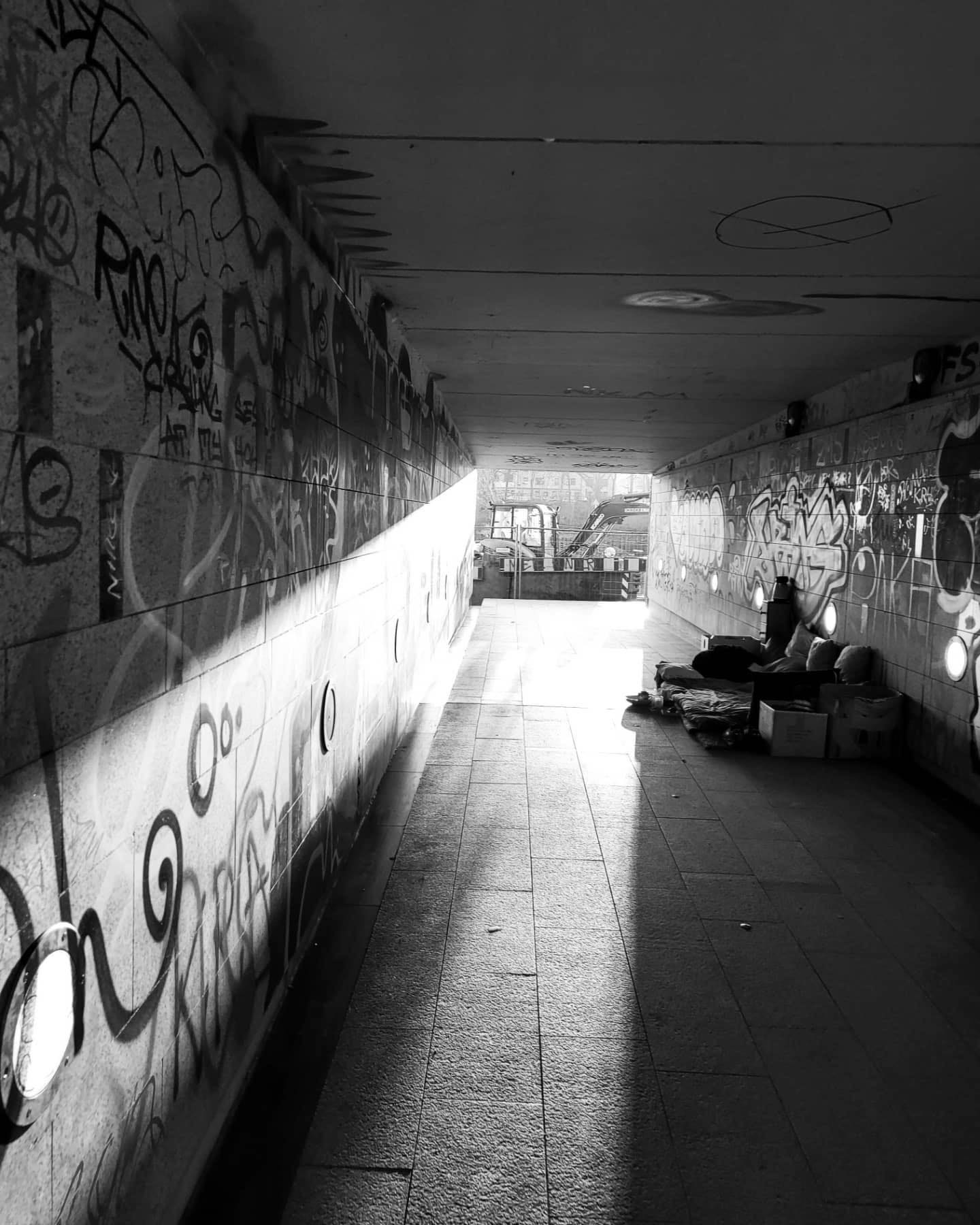
A rearview glimpse – seeking clarity to move forward
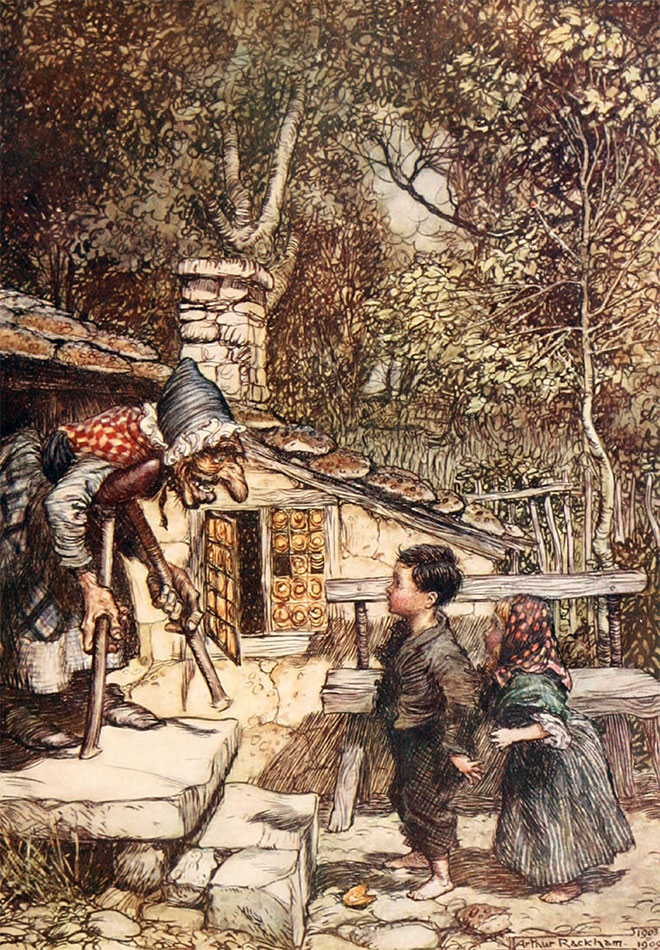
Hansel and Gretel
Some stories only reveal their true shape when you return to them with older eyes. Hansel and Gretel is one of those stories for me.
As a child, I inherited the faith‑polished version: the witch as hellfire, the oven as punishment, the whole thing a morality play about obedience. But the older bones tell something different — something older than Christianity, older than the famine, older than the moralizing.
The witch figure likely traces back to Baba Yaga, a Slavic archetype who predates the church by centuries. Not a simple villain, but a threshold guardian — keeper of boundaries, tester of character, the one who decides whether you pass or perish. She is ambiguity embodied: dangerous, necessary, and never merely evil.
Even some Ostara traditions carry her shadow. Families would extinguish the hearth, introduce children to the cold oven as a gesture of respect toward the ancestors, then rekindle the fire from scratch.
A ritual of continuity. A quiet initiation. A symbolic meeting with one’s kindred dead.
But myths bend under the weight of history.
The Famine
In the early 14th century, Europe staggered through the Great Famine — years when rain drowned the fields, crops failed in succession, livestock died where they stood, and entire villages starved. Parents abandoned children because they could not feed them. Chroniclers wrote of hunger so deep it warped the mind. A generation grew up with famine as a living ghost.
In that landscape of scarcity, the old Ostara rite twisted into something darker. A symbolic introduction to the ancestors became a literal disappearance of children. Families weren’t guiding the young toward memory — they were losing them to hunger.
The story shifted to explain the unexplainable:
Why children vanished. Why parents made impossible choices. Why hunger turned ordinary people into shadows of themselves.
The witch became famine itself. The oven became the maw of starvation. The forest became the place where families dissolved under the weight of scarcity.
A myth built to metabolize collective grief.
And once the famine had carved its mark into the tale, the church machinery stepped in. What had been an ancestral gesture — intimate, domestic, tied to hearth and lineage — was retooled into something mechanized, aligned with the engines of men. Fear became a resource. Myth became a lever. The story was sanded down, moralized, and repurposed into a cautionary script about sin, obedience, and the dangers of wandering off the sanctioned path.
A rite of belonging became a threat. A symbolic gesture became a warning label. An old story about continuity became a tool for control.
Modern Christianity feels increasingly like a house built on interpretive drift. The distance between origin and outcome widens, and the scaffolding creaks.
Spirituality needs spirits and mortals — not machinery. Even Dave Matthews gestures at this in Seek Up: the divine doesn’t cling to the piles we build; it watches as our obsessions stack into nothing. Meaning slips when we try to domesticate it.
And now, in our own time, we’re arguing over steeples in Fairview, Texas — lawyers insisting they’re “required,” as if the sacred depends on rooflines and silhouettes. As if the divine is a zoning ordinance.
Aristotle's Golden Mean
And it’s not just religion. It’s culture. It’s philosophy. It’s everywhere meaning gets borrowed, bent, misapplied beyond its purpose, and repeated without memory.
People misquote Aristotle the same way they misread Dave Matthews — flattening nuance into slogans, sanding complexity into something that fits on a bumper sticker. A song about existential ache gets treated like a party anthem. A philosophical caution becomes “moderation in all things.” The original intent dissolves, replaced by whatever the crowd needs it to be.
Aristotle’s Golden Mean — virtue as the balance between excess and deficiency — has been shadowing me since I was fourteen or fifteen. Then again in a philosophy class at USU. Then again years later, sitting with a rabbi at Yeshiva University who gently clarified that “moderation in all things” isn’t Torah, isn’t Talmud, isn’t even Chabad. It’s closer to Icarus than Sinai.
Dogma often wears the mask of wisdom. Culture often wears the mask of doctrine. And people repeat both with the confidence of revelation.
The older I get, the more I see how transactional our idea of happiness has become — how often it demands something, expects something, wants a return. Joy, by contrast, is elemental. It arrives unbidden. It intersects. It doesn’t negotiate.
Today I saw my almost‑five‑year‑old’s joy at his birthday party — bright, unfiltered, unbargained‑for. Later, I saw the joy of a child I barely knew during a playdate — a small, serendipitous moment that could’ve gone to Liz but landed with me instead.
In a world full of noise‑mongers and performative certainty, those moments cut through like clean air. They remind me that my Jungian “nurturer” archetype isn’t a burden; it’s a compass. Pushing through my own discomfort to nurture my kids is worth more than any earthly commodity.
And maybe that’s the thread running through folklore, famine, philosophy, and parenting:
Meaning is not inherited — it is rekindled. Meaning is not preserved — it is practiced. Meaning is not guaranteed — it is recognized.
The Ostara hearth. Baba Yaga’s threshold. Aristotle’s middle path. A child’s laughter on an ordinary afternoon.
Celestial thinking, for me, isn’t about fate or cosmic scorekeeping. It’s about noticing joy when it appears, and being grateful when I get to meet it.
Dogma is shallow. Joy — when it shows up — is honest. I’m learning to keep my eyes open for it.
You may also like

Presence Over Perfection
- May 11, 2026
- by #ZT
- in Agency, Discernment & Systems
Instructure – A view from my porch
The Doorway in the Fog