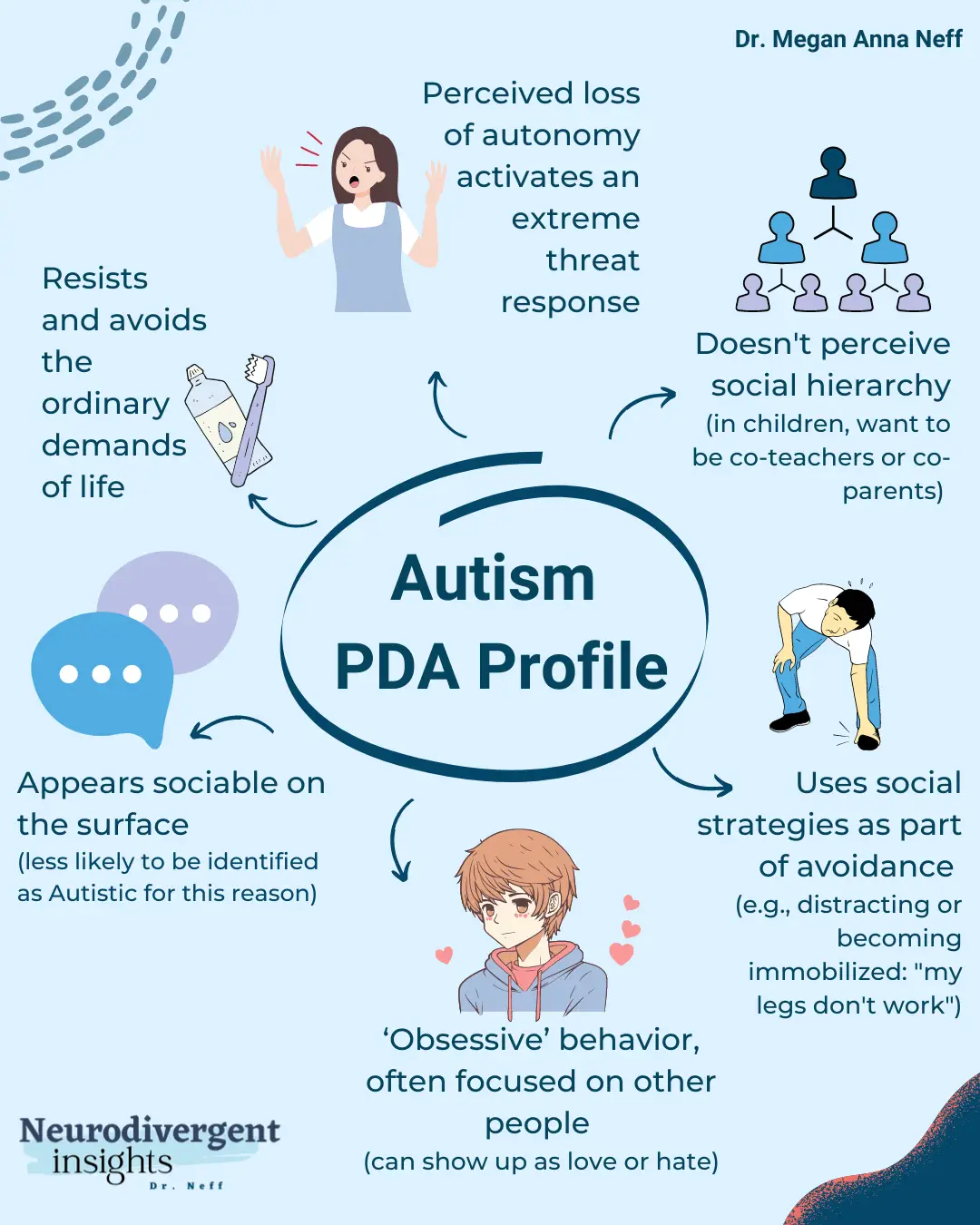
Our path navigating secondary Education in Utah with an ASD kiddo with a PDA profile
We ended up following what I can only describe as an unnatural version of unschooling inside the Utah public school system. Not because we were chasing a philosophy, but because the system kept presenting gates my PDA‑er had no reason—or capacity—to walk through. He’s 20 nearing 21 now, and college isn’t even on his radar. And honestly, that’s fine. He is a brilliant learner on his terms – so we cultivate that and help him explore the guardrails he may have misinterpreted or ignored or treated as irrelevant!
The path we took wasn’t driven by external markers or expectations. It was about shaping the credit requirements around his interests and helping him reach graduation without pushing him past his capacity.
We were fortunate to find an advisor who didn’t just “support” him in the procedural sense, but actually took the time to understand who he was and create an authentic connection that my son allowed. Sophomore and junior year became this hybrid, stop‑out, stitch‑it‑together journey. A few sprinkled in Whiskey Tango Foxtrots and friction-filled explosions, too! The advisor invited him into the social spaces that my kiddo genuinely cared about, built trust, and operated in the seams of the system. This advisor gathered the right evidence, reframed the right boxes, and essentially ran interference with the state so my kid could graduate without being forced into performative compliance he simply couldn’t tolerate. He gamed the system for my kid, not against him. This advisor worked around the can’t not won’t concepts of Ross Greene!
We also built scaffolding that made sense for him. We bought a laptop and let him “lease” it from us—he got a job during COVID and paid it off monthly, early even. Later he did the same with a project car. Still doesn’t have his license, but he paid for the car. Autonomy on his terms.
And yes, we dangled one long‑term incentive: if he graduated on time, we’d pay for a tattoo of his choosing. That promise helped us through some of the more volcanic dysregulation episodes—those stretches where any whiff of schooling pressure triggered total refusal. We decoupled from attendance, ditched the compulsory performance model, and focused on actual comprehension. Traditional delivery bored him senseless; his ASD profile had him miles ahead academically but completely unwilling to jump through meaningless hoops. The advisor understood that and built a bridge out of whatever materials he could find.
After graduation, the next step wasn’t college, because that gate simply didn’t make sense for him. The whole idea of proving himself through a piece of paper tied to performative compliance was never going to align with his autonomy or his nervous system. So instead, he moved into the restaurant world. He started at the bottom, learned the rhythms, and has worked his way into management. Some days still require crisis‑level co‑regulation and interventions, but overall he’s found a space he genuinely enjoys — for now, it fits.
I had to do my own unlearning alongside him. I had to let go of the version of the future I thought I was supposed to want for my kid. I leaned into the idea that “in time” doesn’t mean my time; it means theirs.” That shift gave him room to breathe, to grow, to figure out who he is without being dragged through expectations that were never built for him in the first place.
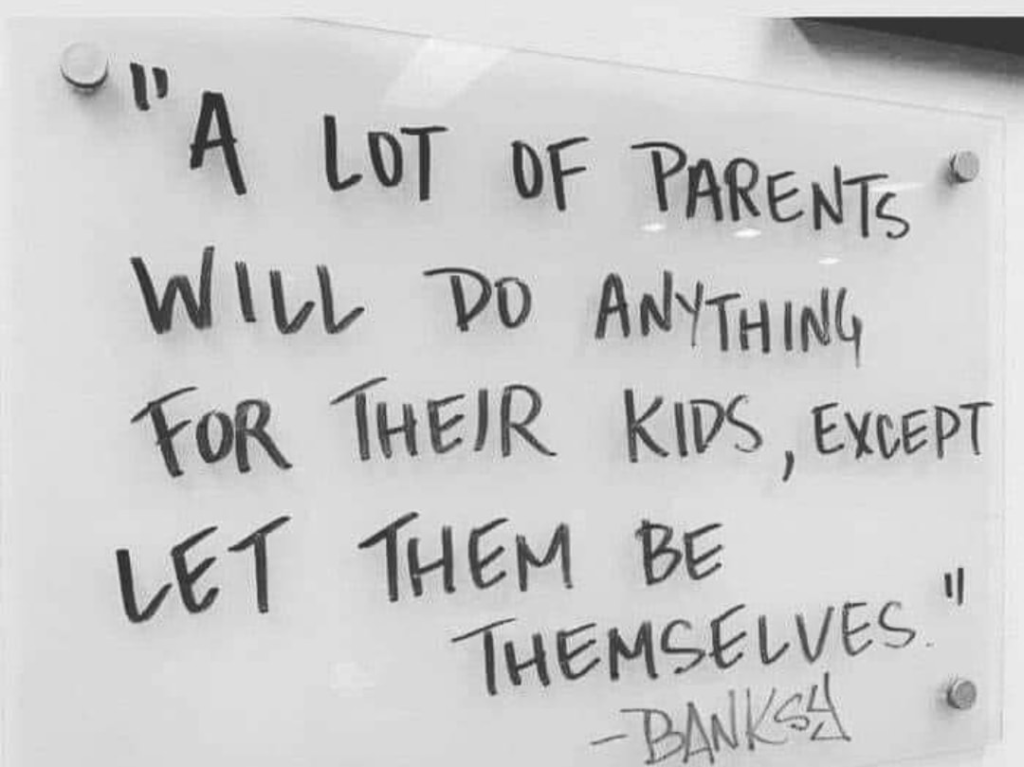
And then — the Banksy quote:
“A lot of parents will do anything for their kids, except let them be themselves.”
When I first saw it, it hit like a quiet truth I’d been circling but not naming. It cracked open the paradigm I’d been clinging to. It forced me to confront how much of our family tension came from trying to fit a system‑shaped mold onto a kid who was never going to move that way. It wasn’t about neglecting responsibility; it was about recognizing that responsibility sometimes means stepping back, not stepping in.
That moment didn’t magically solve everything, but it reframed the entire landscape. It reminded me that the problem wasn’t my kid — it was the architecture around him. The expectations. The timelines. The invisible scripts. The pressure to “do school right” even when “right” was the wrong metric for him.
The Banksy quote gave me permission to adapt. To stop fighting the system head‑on and instead navigate the seams — the places where flexibility actually lives. It helped me support him through a school structure that wasn’t designed for him, and it helped me see the advisor for what he truly was: the hinge point. The bridge. The person who understood how to work inside the rules without letting the rules crush the kid they were supposed to serve.