
Premeditatio malorum (2) – my practice and thoughts


What is – Premeditatio malorum? A definition of sorts to start

Premeditatio malorum : “The exercise of imagining things that could go wrong or be taken away from us. It helps us prepare for life’s inevitable setbacks. We don’t always get what is rightfully ours, even if we’ve earned it. Not everything is as clean and straightforward as we think they may be. Psychologically, we must prepare ourselves for this to happen.”
Ryan Holiday
Here is a link to some more thoughts on the subject from Ryan Holiday’s perspective – link to Ryan Holliday’s thoughts at his Daily Stoic blog
Life. It is hard. It is messy. It is beautiful. It is life!
It doesn’t mean it won’t happen or it will happen! Life isn’t really fair, so what? So, if it does happen, it does. If it doesn’t happen, it doesn’t! The practice of Premeditatio malorum helps me in adapting and responding. Does it make it easier to accept the difficulties or evils or hardships that I may encounter? Not at all! What it does do is help me shape my disposition and responses to difficult things. Life is full of many interactions which I have no control! So, I seek and strive to focus on what I can control. My response to the stimulus! Further, it exercises the systems required mentally and physically to adapt – especially in circumstances where what one imagines is drastically over simplified. January 2025 immensely illustrated my personal need to recalibrate.
A huge observation and challenge I often see is over-thought! Paralysis Analysis and lack of action (FREEZE!). It is my observation that over intellectualizing and not including action is destructive and often leads to APATHY. So while I may anticipate to have a generally good day, I try to be ready in case it isn’t and try to maintain a cheerful disposition either way. January 2025 is pushing my limits!
Another way to spell perfection is ‘paralysis’!
Winston Churchill
Premeditatio Malorum – CASE Example
Pathological Demand Avoidance and its effects — CAN’T Not Won’t!
Something interesting to include here is the example of Pathological Demand Avoidance. Two of my children experience this condition, and unlike many of us who can pause and choose how to respond between stimulus and reaction, they often move straight into fight-or-flight mode.
While most current resources emphasize behavioral strategies, these approaches frequently fall short when PDA is present—because the root of the disruption is neurological and biological, not simply behavioral. PDA challenges the conventional pathways that allow neurotypical individuals to regulate responses logically or reasonably. Instead, it bypasses those systems entirely, leading to responses such as Fight, Flight, Freeze, Fawn, Flop, Funster, and Fib—a growing framework that reflects the complexity of these reactions.
There is hope, however, in the brain’s capacity for neuroplasticity, which opens the door for meaningful dialogue and future research. PDA is often accompanied by intense anxiety and other dysregulated responses, making the journey one of deep learning, resilience, and adaptation.
From the outside, many people struggle to understand the unique challenges—and the unique strengths—within our family. We navigate a landscape filled with aspirations, setbacks, breakthroughs, and growth. It’s exhausting and exasperating at times, but we remain hopeful and committed to evolving, learning, and advocating for better understanding and support.

Looking for info about PDA (Pathological Demand Avoidance)
✓ Definitions
✓ PDA
✓ Story
✓ Parenting
✓ Accomodations
✓ Disability
✓ Support
✓ Fears


Life. It is hard. It is messy. It is beautiful. It is life!
Marcus Aurelius approaches I employ
- Practice The Virtues You Can Show
- Courage
- Temperance
- Wisdom
- Justice
- Draw Strength from Others
- Focus on The Present
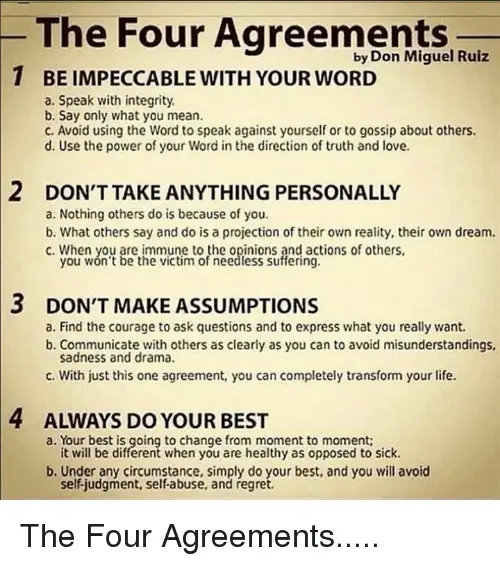
Faith based tenets approaches I employ
- The Golden Rule
- Be curious not judgmental
- When my religion tries to come between me and my neighbor, I will choose my neighbor.
- Don’t fall into the trap of spelling perfection with the word paralysis (inaction)
- This notion is often predicated by:
- Self-righteousness or justification
- Intellectual Prowess often without action
- This notion is often predicated by:
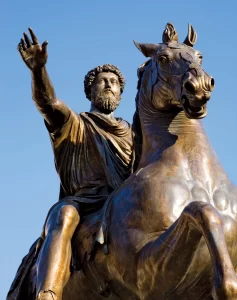
“Not to feel exasperated, or defeated, or despondent because your days aren’t packed with wise and moral actions. But to get back up when you fail, to celebrate behaving like a human–however imperfectly–and fully embrace the pursuit that you’ve embarked on.”
— Marcus Aurelius
A glimpse at some of my coping skills
Work Related – Post From LinkedIn Below:
Triathlon/life related
Triathlon has become a significant part of my life.
I’m reminded of a moment that marked a turning point for me—sitting on a Delta flight from Paris to Salt Lake City. As I buckled in, I realized I was just a few inches away from needing a seatbelt extender. That moment hit me hard. Wait… am I obese? How did I get here? I was flooded with confusion, discomfort, and a deep sense of urgency.
That experience sparked a journey to reclaim my health and sense of control. (see this post for the context and background) Like many others, my progress was disrupted in 2020 when COVID hit. The pandemic brought stress, uncertainty, and major life changes—including the birth of our fourth child during lockdown. Thankfully, I was able to be present for the birth and recovery, following strict protocols.
Despite the setbacks, I found my footing again. I committed to disciplined routines and eventually completed Ironman California in October 2022—a milestone that felt like a true comeback.
Then life threw another curveball. On a casual bowling date with my wife, I tore my lower hip adductor. Another unexpected detour in the journey.
Post to some more of my library of coping skills
I share this post as it pairs with my thoughts here today:
https://happyinthehills.com/zentriathlete/mindset-ego-and-injury-the-journey-is-real/
“Pessimism is an indulgence, despair an insult to the imagination. There are wonderfully positive things out there.”
— Wade Davis
Loud disruptive noises everywhere
MINDSET
One of the most valuable lessons I’ve learned through triathlon training and race completions is that epic achievements are built through small, consistent actions. It’s the little things—done repeatedly—that create transformation.
Since my injury in January, I’ve been somewhat in hiding, mentally and physically. But it’s time to recalibrate. Time to rebuild small habits and routines. My goal is to return to at least 70.3 events by May.
Looking at the new Ironman Flex90 registration model, I’m honestly stunned. I usually register in March, just before the final cutoff, once I know I’m race-ready and on track. But now, the initial registration fees are higher than I’ve ever seen—following what feels like an airline-style pricing model. It’s wild.
Maybe Andy Messick really was nudged toward retirement. I understand that Ironman is a brand and a business first, but it’s the age groupers who carry the weight of the product. With this pricing shift, they may have out-marketed their own “Anything is Possible” message.
Filtering the noise
I find the messiest thing today is being disciplined enough to filter through the noise. Much of the noise is catered to grab attention. It then becomes disruptive. That is by design, and that is its purpose. I find that iterative growth and mindset was burned into my dna from environmental things. The parenting I received included a faith-based structure. I learned about prayer. This helped me learn about personal meditation, focused recovery and restful states early in life. I find these practices to be interchangeable and often complimentary. Sometimes I am working on me, sometimes I am communicating to universal Deity or constructs and other times it is pure meditative catharsis! I also received a lot of assumptive programming along the way, which required me to dig in myself to identify and seek for truths and wade through assumptions or projected half-truths.
Some examples include:
- Job
- I learned about the miraculous composite story of Job early. Although canonized by non-secular Christians
- I have often wondered what my judaic friends across the aisle think
- A most intriguing opinion cited in the Midrash is that Job did not actually suffer the tragedies attributed to him but did live at some point. The Torah intends to communicate the sheer fortitude of Job’s faith in that even if he were to suffer the overwhelming misfortune described throughout the book, his faith would have sustained him throughout. (Bereishit Rabbah 57:4.)
- Sodom and Gomorrah
- Link to info – My post with source attributions
- This was a fun read, the comments especially from Michal and the Primrose fellow were quite interesting. TLDR – it had little to do with sexuality execution preferences and mostly about elitism and idealism – the stories in and around how they deflected charity was mind-blowing as I observe similar notions active in Christian Orthodoxy today
I could cite more examples but I wanted to use illustrative examples that made me stop and hit the pause button. Hard stop! Dig in a bit. Discover, recalibrate, reconfirm, deconstruct where necessary and only carry forward what was necessary. I love this quote below and I think it applies to many vectors of life – core values, parenting, triathlon, mindset, being a decent human:

“If a man will begin with certainties, he shall end in doubts; but if he will be content to begin with doubts he shall end in certainties.”
~~Sir Francis Bacon
Realizations – lessons learned
The older I get, the more I realize how little I truly know.
It’s a curious shift from adolescence, when I was convinced I had it all figured out. But with time — and especially through triathlon — I’ve been able to reconcile many of the internal struggles I carried for years. These weren’t things that ever stopped me, but they did weigh me down. Triathlon gave me a way to let go of the ego, the bravado — the part of me that was, frankly, kind of a jerk.
It brought me back to mindfulness. To being open, available, and present.
Let me end with this thought — and I think it applies far beyond just parenting:
It’s a powerful practice to pause and recalibrate in the moment.
A mental snapback.
A return to center.
Final thoughts – Premeditatio malorum
This practice isn’t rooted in pessimism — not at all.
It’s about being prepared to carry the weight that no one wants to carry. And if that burden does arrive — which, from experience, I can say it often does — the preparation gives you something like muscle memory. Not perfection. But a reminder: I can do hard things.
Even Atlas had to take a knee.
Life is heavy. It’s dense. And self-reliance, while admirable, is a double-edged sword. Asking for help in those moments feels unbearable — especially when I’m trying so hard to be strong. Vulnerability doesn’t always have room to breathe in the thick of it.
I imagine I’m not the only one in that space — waiting, hoping someone notices the void.
The lack of space.
The lack of time.
The lack of energy, fortitude, or whatever else is supposed to keep us going.
The presentation below is overwhelming.
Watch with care.
Best,
Last Lesson learned from PREMEDITATIO Malorum
Simon Sinek calls it sitting in the mud. Ernest Hemingway referred to it as the sanctuary of humanity. A few memes classify it as sacred space.



‘Pity the nation’
Pity the nation that wears a cloth it does not weave
and eats a bread it does not harvest.
Pity the nation that acclaims the bully as hero,
and that deems the glittering conqueror bountiful.
Pity a nation that despises a passion in its dream,
yet submits in its awakening.
Pity the nation that raises not its voice
save when it walks in a funeral,
boasts not except among its ruins,
and will rebel not save when its neck is laid
between the sword and the block.
Pity the nation whose statesman is a fox,
whose philosopher is a juggler,
and whose art is the art of patching and mimicking
Pity the nation that welcomes its new ruler with trumpeting,
and farewells him with hooting,
only to welcome another with trumpeting again.
Pity the nation whose sages are dumb with years
and whose strongmen are yet in the cradle.
Pity the nation divided into fragments,
each fragment deeming itself a nation.
~Kahlil Gibran


You may also like


An Armistice Day Reflection