When the Map Doesn’t Match the Terrain: Notes From the Asylum Between My Ears
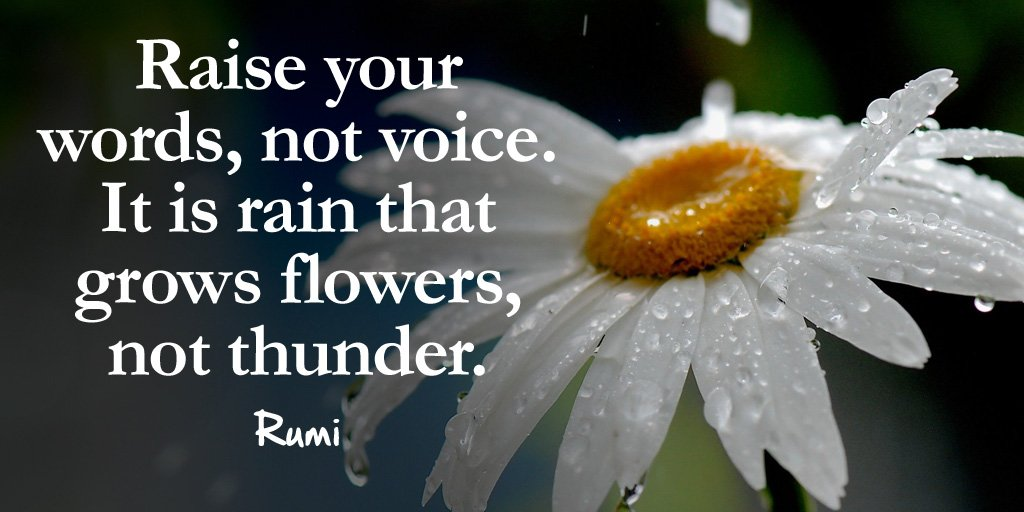
Literacy isn't always limited to reading
Every so often, a conundrum wanders across the asylum between my ears and refuses to leave quietly. The latest one arrived through a familiar doorway: someone encountering information that didn’t fit their existing frame — faith‑based, evidence‑based, or otherwise — and spiraling into discomfort, defensiveness, and claims of manipulation.
It reminded me how often we mistake friction for danger.
Some people were raised inside interpretive systems where information arrives as decree. Truth flows downward. Certainty is the currency. When new data shows up — especially around topics like biological sex, gender identity, or anything that challenges a binary worldview — it doesn’t land as information. It lands as threat.
But the world doesn’t care about our preferred level of simplicity.
Biology itself expresses sex across multiple arcs: genetic patterns, anatomical presentation, and hormonal pathways. Three channels, not one. And when a system has multiple channels, the outputs aren’t always tidy. That’s not ideology. That’s complexity.
Yet for someone operating from a single‑lens framework, complexity feels like chaos. Chaos feels like manipulation. And manipulation feels like an attack.
The problem isn’t the topic. The problem is the lack of interpretive tools.
Frameworks vs. Facts
This whole thing reminded me of a conversation between a high‑level coach and an elite athlete. The athlete asked how lessons learned from one person could be applied to another. The coach’s answer was simple: you can’t. Copy‑pasting frameworks across individuals produces incorrect results.
That principle scales.
Mathematics teaches us methods — not because we’ll use calculus to negotiate with a neighbor about their off‑leash dog, but because the structure of problem‑solving transfers. The equations don’t cross‑apply. The thinking does.
But many people misapply the old maxim “don’t give up what you’ve learned.” They cling to the old data point, not the method that produced it. They defend the snapshot instead of updating the map.
The method is what survives. The method is what evolves. The method is what keeps us from collapsing when the terrain changes.
An example from Endurance sports - a reflection. from my own journey
Too often I watch athletes — myself included — get locked into a training plan or a prescribed map. The coach, the spreadsheet, or the AI‑generated program becomes the oracle. But every oracle has a blind spot: it can’t feel the friction in your chest when the fog rolls in. It can’t sense the subtle shift in internal weather that tells you the map and compass are about to fail.
Endurance has taught me that discernment is the one tool no coach can hand you. I learned that the hard way once in St. George. I had over‑biked, under‑fueled, and by the time I hit the run I was mentally cooked — ready to walk off the course or check out entirely. Every tool I had was broken in that moment, including my own discernment. Then a voice cut through the canyon from somewhere below — a friend recognizing me, calling my name with the perfect pitch of someone saying, “Get your head out of your ass, it’s not a hat.” It hit me like a lighthouse beam. Not a rescue, not a pep talk — just enough signal to interrupt the spiral and let me navigate the danger with care. I still finished. Not at my expectation, but well. And it was still good.
That’s the thing about endurance: sometimes the method holds, sometimes the map holds, and sometimes the only thing that holds is a single human voice cutting through the fog long enough for you to find the next foothold.
Faith, Self‑Compassion, and the House in Order
This conundrum also brushed up against another conversation — someone insisting that “self‑love” doesn’t appear in their sacred texts. But the distilled commandments say otherwise: love your neighbor as yourself. That’s a reflective equation. If you treat your neighbor better than you treat yourself, the system is misaligned.
And in another passage, the idea appears again: before leading others, one must have a house of order. Not performative order. Not compulsory order. Actual internal grounding — the kind that comes from courage, temperance, and the slow accumulation of wisdom.
You can’t demand justice without first wrestling with your own chaos. You can’t offer compassion without first practicing it internally. You can’t navigate complexity if your only tool is certainty.
What I Do When the Information Doesn’t Fit
So here’s the anchor I keep returning to:
When I’m presented with information that doesn’t align with my existing frameworks — faith, evidence, intuition, or experience — I don’t defend the old data. I return to the method.
I ask:
What lens am I using right now?
What other lenses exist?
What part of this friction is signal, and what part is my own discomfort?
Am I treating this as information or as identity threat?
What would curiosity look like here?
I don’t always get it right. But the method keeps me from spiraling into certainty theater.
The Conundrum, Distilled
Most of the conflict we see — online, in households, in communities — isn’t about the content of the information. It’s about the capacity to metabolize friction.
Some people were never taught that skill. Some were taught to fear it. Some were taught that discomfort is evidence of corruption rather than growth.
But the world keeps updating. Maps keep changing. It’s the same lesson endurance teaches: the terrain changes whether you’re ready or not.
So the work — at least for me — is to stay grounded, stay curious, and keep the house in order. Not to win arguments. Not to convert anyone. Just to keep practicing the method that lets me navigate complexity without collapsing into fear.
That’s the conundrum. That’s the practice. That’s the compass I lean into as the fog rolls on.
You may also like

Top of Mind – Work Sphere Related
- April 22, 2026
- by #ZT
- in !St;ll I Pers;st
Stoic Discipline in a Neurodivergent House